


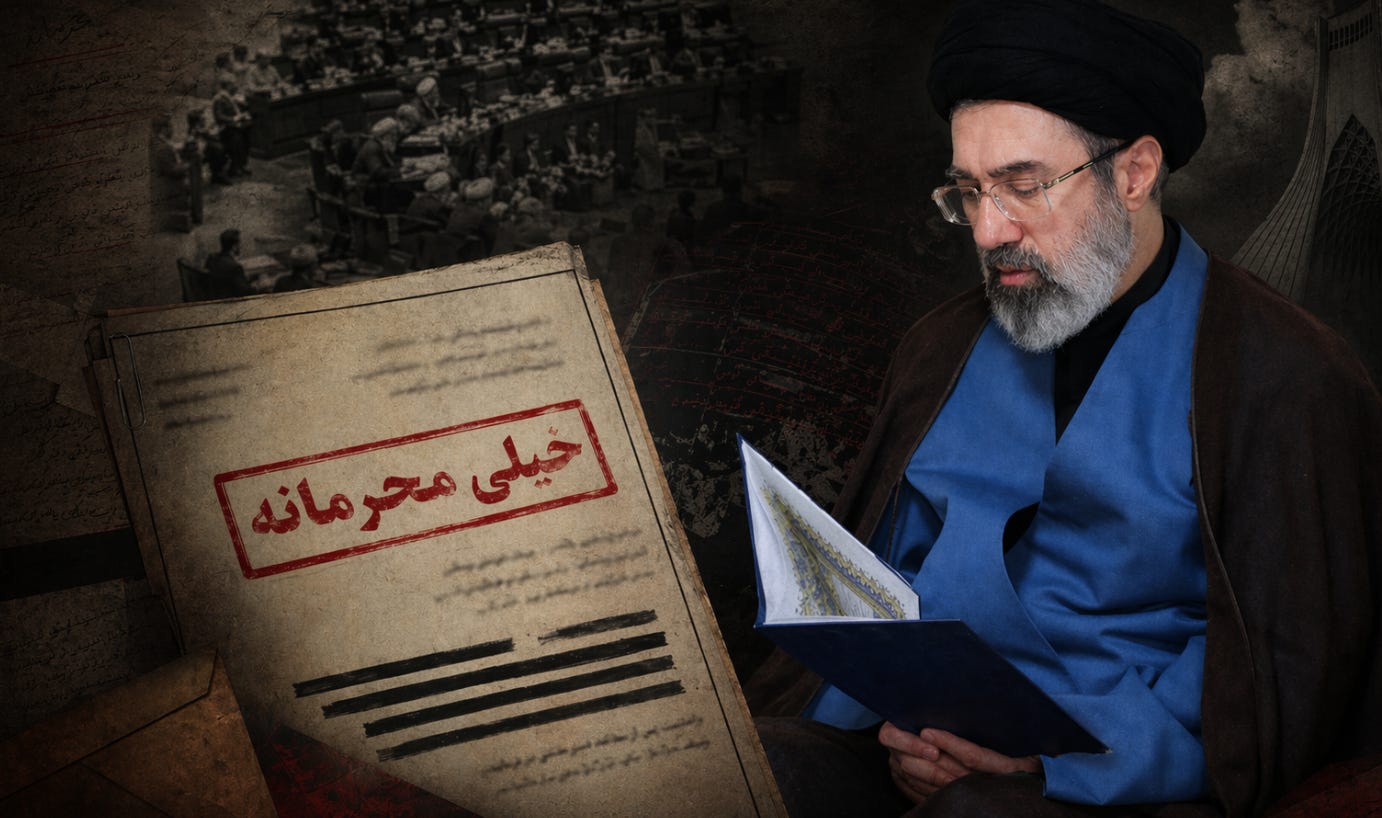
The real story behind Tehran’s sudden “unity” campaign did not begin with Donald Trump’s accusation. It began with a secret letter.
In recent days, word has circulated in Iranian political circles about a highly confidential letter reportedly written by a group of senior officials to Mojtaba Khamenei. According to those familiar with the matter, the letter warned that Iran’s economic situation is grave, that the country cannot continue on its current path, and that the leadership has no practical choice but to negotiate seriously with the United States over the nuclear file.
The historical echo is hard to miss. In the final days of the Iran-Iraq War in 1988, senior Iranian officials and commanders warned Ruhollah Khomeini that the war could no longer be sustained. Only days earlier, Khomeini had still been insisting on continuing the war. But under the weight of those warnings, he accepted UN Security Council Resolution 598 and ended the conflict, a decision he famously likened to drinking from a poisoned chalice.
That is why the current letter matters: it suggests that some senior figures now see the nuclear standoff as another moment when ideological insistence is colliding with the limits of the state.
The reported signatories included senior figures such as Mohammad Bagher Ghalibaf, Masoud Pezeshkian, Abbas Araghchi, Mostafa Pourmohammadi, and others. Some officials apparently refused to sign it. One name now circulating is Ali Bagheri Kani, Iran’s former chief nuclear negotiator under Ebrahim Raisi.
The letter was supposed to remain top secret. It was addressed to Mojtaba Khamenei, not to the public, Parliament, or the ordinary political class. But according to accounts now circulating, Bagheri Kani showed the letter to other hardliners outside the high-level circle and emphasized that he had not signed it. From there, the matter leaked into political circles in Tehran.
Two public reactions suggest how sensitive the leak has become. The first came from Jalil Mohebbi, a figure close to Ghalibaf. In a pointed legal warning, he wrote that if a confidential letter is given to a member of a meeting, and that person shows it to outsiders while saying, “I did not sign this letter,” then under Article 3 of the law on publishing and disclosing confidential and secret government documents, that person can face up to ten years in prison. Mohebbi added: “This offense is unforgivable.”

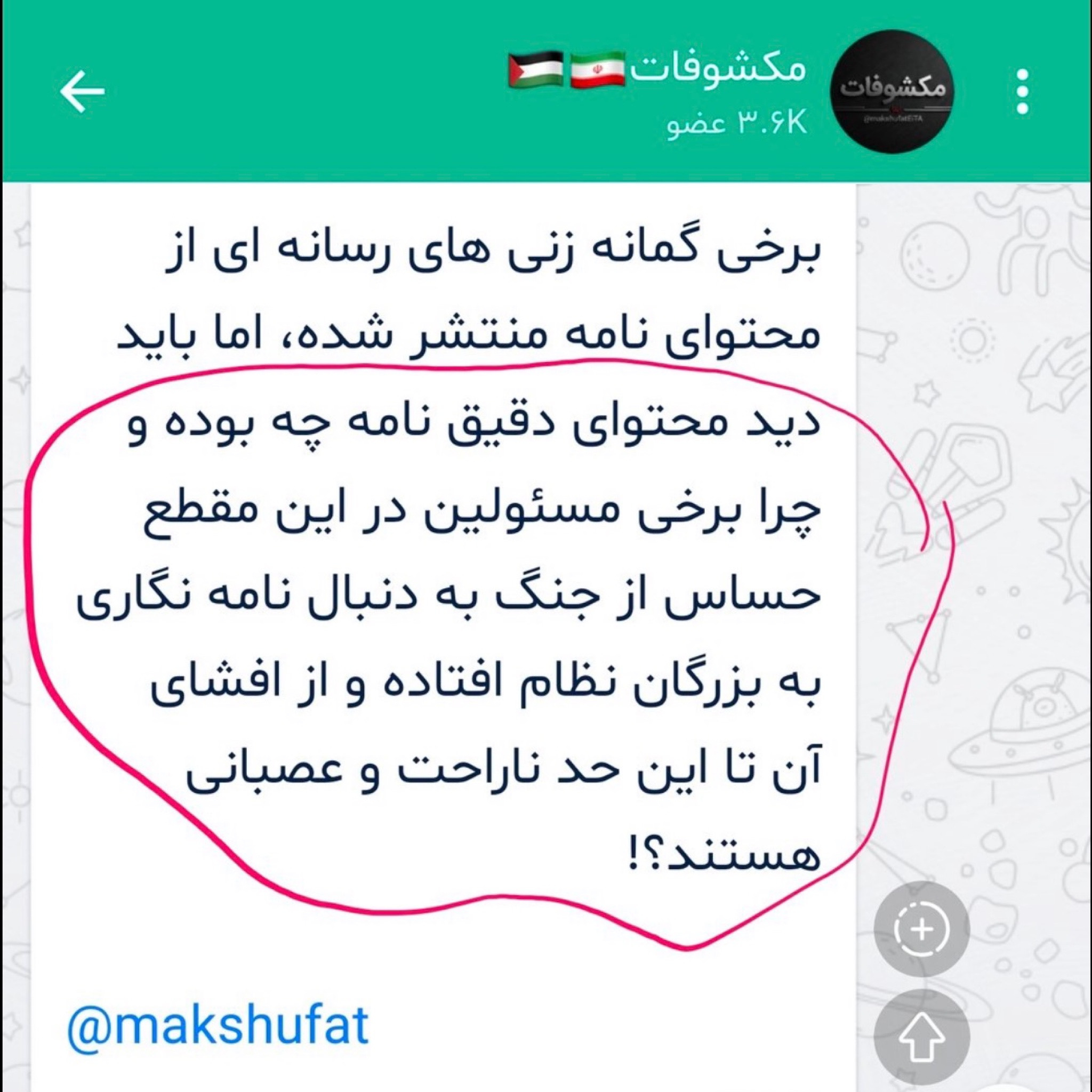
The second came from a Telegram channel that referred to an “important confidential letter” written by some senior officials and left unsigned by others. The post asked why, at such a sensitive moment after the war, some officials had begun writing letters to “senior figures of the system,” and why others were so angry about its disclosure. In Iranian political language, that phrase is often used to refer to the Supreme Leader without naming him directly.
Trump’s Claim Meets Tehran’s Denial
This was the atmosphere in which Trump’s claim landed. He said Iranian officials were “fighting like cats and dogs” because they could not agree about negotiations with the United States. Tehran immediately claimed otherwise. On Thursday, senior officials moved in near-unison to insist there was no split.
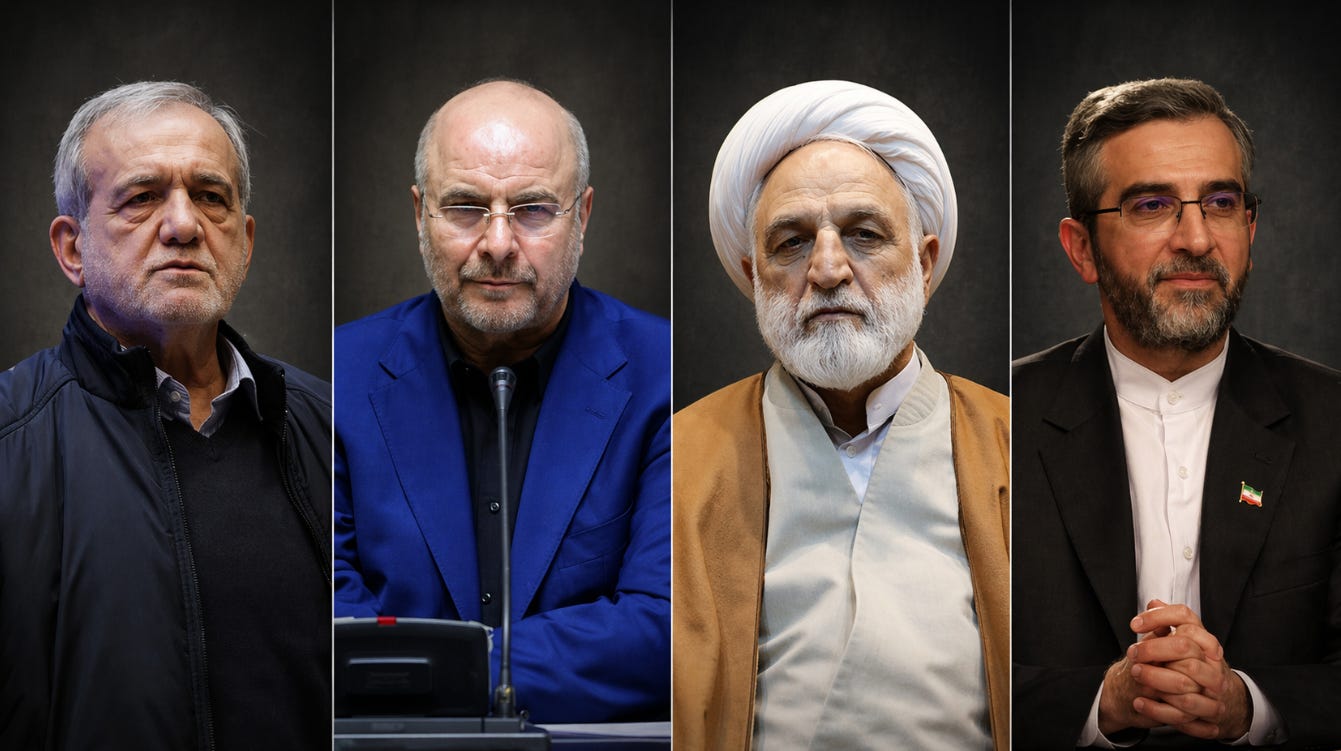
Ghalibaf, the speaker of parliament, wrote: “In Iran there are no hardliners or moderates. We are all Iranian and revolutionary.” He added that with the “iron unity of the nation and the state” and full obedience to the Supreme Leader, Iran would make the “criminal aggressor” regret its actions.
President Pezeshkian posted almost the same message: “In Iran, there are no ‘hardliners’ or ‘moderates.’ We are all Iranians and revolutionaries.” He too invoked unity between nation and state, obedience to the Leader, and victory for Iran.
Mohseni Ejei, the head of the Judiciary, went further. He said the “foolish president of America” should know that “hardliner” and “moderate” are absurd and baseless terms from Western political literature. In Islamic Iran, he said, all groups and factions ultimately stand united under the orders of the Supreme Leader.
Mojtaba’s Red Line
Before the first round of negotiations, Mojtaba Khamenei had reportedly drawn a red line: Iranian officials were not to discuss the nuclear issue with the United States. But the Iranian delegation had to talk about the nuclear file, because any serious negotiation with Washington necessarily revolves around it. So they did.
That decision triggered the hardline backlash.
Mahmoud Nabavian, deputy chairman of Parliament’s National Security Commission, was present in the Pakistan negotiations. He has since said that the outcome of those talks was not satisfactory and that the negotiating team made a “strategic mistake.” His accusation was specific: the team acted “contrary to the explicit red line of the Leader of the Revolution” by discussing the nuclear issue with America.
Nabavian also said the delegation should have discussed the ten points set out by the Supreme Leader, not the nuclear file. He criticized the idea that the “Resistance Front” could be reduced only to Lebanon, saying Gaza, Yemen, and Iraq are also part of it. Most importantly, he said that based on new information he had received, from now on, “even if the naval blockade is lifted, any negotiation with America is forbidden.”
Amir Hossein Sabeti, a hardline MP, made the same charge more directly. “I am saying this for the first time, and I stand by what I say,” he said. “If what I say is false, the officials should take action against me.” He added that one of the Leader’s red lines was that “in the negotiations, the nuclear issue must absolutely not be discussed.” Then he challenged Ghalibaf and Araghchi by name: if they did not negotiate over the nuclear issue, they should explicitly deny it. If it becomes clear that they did, he warned, “we will frankly speak out to the people of Iran in a different way.”
The Backlash Moves Into the Open
This helps explain why the Iranian delegation did not travel to Pakistan for the second round. The dispute was no longer merely about diplomatic tactics. It had become a fight over whether senior officials had crossed a red line set by Mojtaba Khamenei.
The backlash then moved into the media. Nour News, affiliated with Iran’s Supreme National Security Council, published a video warning that a “dangerous current” was trying to portray Ghalibaf and Araghchi as figures who, instead of following the line of resistance, were seeking “surrender and compromise.” Nour News said this current was trying to place them against the Leader and other senior pillars of the system.
That formulation is revealing. Ghalibaf and Araghchi were not only answering Trump. They were under pressure from within the regime, where hardliners accused them of abandoning the resistance, pushing compromise, and trying to pressure the Leader.
The secret letter appears to be the center of this crisis. One camp believes Iran’s economic situation has become so severe that the country must negotiate over the nuclear issue and try to reach a deal. Another camp believes that even discussing the nuclear file with America violates Mojtaba Khamenei’s order and amounts to surrender.
The Unity Tweets as Damage Control
That is why Thursday’s tweets sounded so coordinated. They were not just patriotic slogans. They were loyalty statements. Ghalibaf, Pezeshkian, Mohseni Ejei, and others were signaling that they stood with the Leader, not against him, and that the leaked letter should not be read as an act of rebellion.
So when Tehran says there is no division, the evidence points the other way.
There was a secret letter to the leader. Some officials signed it; others refused. The letter leaked. A figure close to Ghalibaf threatened legal consequences for the disclosure. Hardline MPs accused the negotiating team of violating the Leader’s red line. Nour News warned that Ghalibaf and Araghchi were being portrayed as men of “surrender and compromise.” Then, suddenly, senior officials issued synchronized tweets declaring unity and obedience.
Trump said Iranian officials were “fighting like cats and dogs” over negotiations with the United States. Tehran rejected the claim, but the sequence of events points to a real internal fight. The dispute is not cosmetic. It goes to the core of the regime’s strategy: whether Iran can survive its economic crisis without a nuclear deal, and whether pursuing such a deal now means defying Mojtaba Khamenei.
The unity tweets were not proof that Tehran is united. They were the public cover for a split that had already become visible.
They admit the economic weapon is their Achilles heel. The Iranian regime doesn’t care how many of its people are killed. It doesn’t care how many of its people suffer. But they do care about money. Money to pay its proxies Hamas and Hezbollah. Money to send their kids to live lives of luxury in the west. Money to buy luxury homes in London. The so called revolution runs on money. Destroy Irans oil pipelines, oil fields, refineries, oil ports, and the war is won. The Iranian people aided by western liberals installed the theocracy. We don’t owe the Iranians anything until they get rid of the theocracy.
Excellent reporting on the secret letter Mehdi. Your insight into Mojtaba's 'red line' on nuclear talks perfectly contextualizes this coordinated loyalty campaign. It is fascinating to watch the pragmatic wing of the state collide with Mojtaba’s ideology. I recently published a profile on Mojtaba's background, and when you look at his roots in the Qom Seminary and his long history with the IRGC, his refusal to compromise makes perfect sense; he even criticized his father’s 2003 nuclear fatwa. The US strikes may have forced a 'unifying effect' among the elites, seeing Reformist and Principlist factions join hands.