


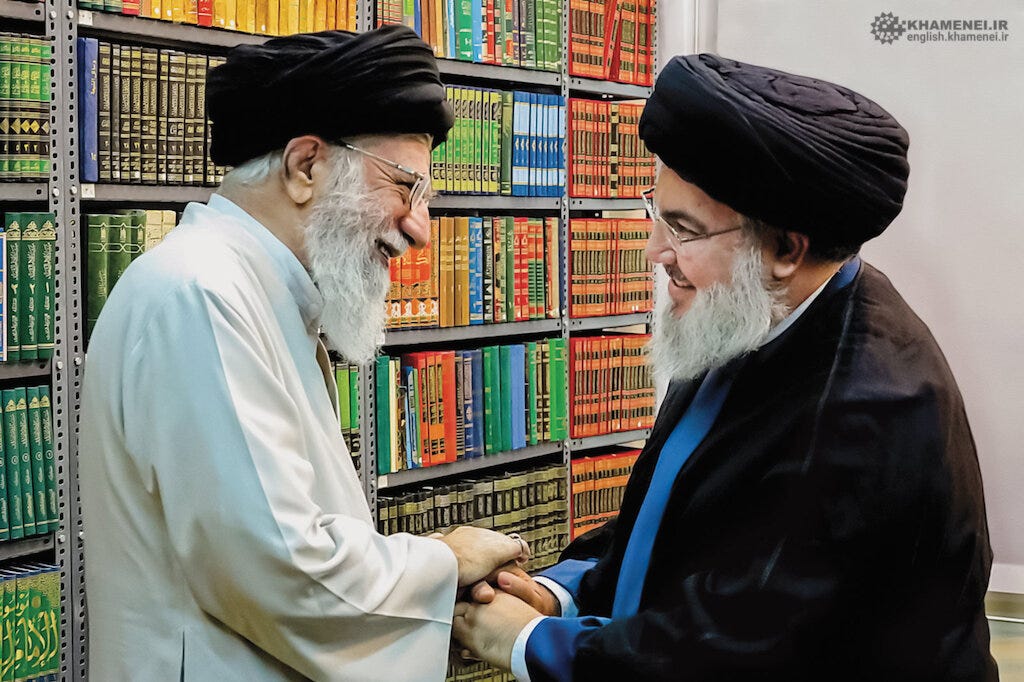
The current U.S.-Israeli war against the Islamic Republic is more than a military campaign. It marks a fundamental reclassification of the regime by its adversaries. For decades, Tehran projected power through a transnational militia network, using armed groups across the region for deterrence, pressure, and aggression while still relying on sovereignty to shield its own leadership. Now it is paying the price. By blurring the line between sovereign state and militant enterprise, the Islamic Republic weakened its own Westphalian shield. It is no longer being treated as a state that sponsors terrorism. It is being treated as terrorism with a state.
Not Treated Like a Normal State
The Islamic Republic is being treated in a way that very few states have been treated in modern war. In the past hundred years, the deliberate targeting of a sitting head of state in an interstate conflict has been rare enough to stand out. Hafizullah Amin, killed by Soviet forces in Afghanistan in 1979, is one of the clearest examples. There have been other attempts, but the pattern remains extremely rare. That is what makes Israel’s decision to target Ali Khamenei, and to kill other senior political and security figures of the Islamic Republic, including Ali Larijani, so striking.
The legal debate belongs to lawyers. The analytical question is different: why are the United States, and especially Israel, treating the Islamic Republic this way?
The answer is that Israel is not treating the Islamic Republic as a normal sovereign state. It is treating it as a regime that weakened its own claim to that status by the way it chose to project power. For decades, the Islamic Republic did not act mainly through the ordinary tools of diplomacy, deterrence, and conventional alliance. It acted as the centre of a transnational militant system.
Iran’s Militia NATO
States have long armed proxies. That is nothing new. Across continents and across decades, governments have funded insurgents, trained guerrillas, and supplied militant groups with light weapons, vehicles, machine guns, rocket-propelled grenades, and portable anti-aircraft systems. But the Islamic Republic went much further. It supplied Hezbollah with a vast missile and rocket arsenal and helped turn it into the most heavily armed non-state military actor in the world. It armed Ansarallah in Yemen with missiles and drones capable of striking targets more than 1,000 miles away. It built, funded, trained, and coordinated militias across Lebanon, Iraq, Syria, and Yemen. It recruited, armed, and deployed foreign Shiite formations from Afghanistan and Pakistan for a long war in Syria. It sought to build the same model elsewhere. This went far beyond traditional proxy warfare. Arming proxies with Kalashnikovs and RPGs is one thing. Arming them with long-range missiles and drones is another.
This was not just sponsorship. It was doctrine. The Islamic Republic described the region as a set of linked fronts, what its allies and partners called the “unity of fronts,” or Vahdat-e Sahat. The meaning was simple: if one front entered a fight, the others would join. In effect, the regime built its own militia NATO, a version of collective force without states, borders, treaties, or accountability. It assembled a military alliance out of armed factions, ideological clients, and designated terrorist organisations.
The Creed Behind the Network
This system was not only military. It was ideological from the start. These groups were not just armed by Tehran. They are tied together by a shared political vision in which hostility to Israel is central and, in many cases, eliminationist. From the beginning, the Islamic Republic defined itself against both the United States and Israel. Ruhollah Khomeini cast the United States as the “Great Satan” and Israel as the “Little Satan.” He treated hostility to Israel not as a temporary position but as part of the regime’s founding identity. Khomeini said that Israel must be wiped off the map, a phrase that later gained global fame when Mahmoud Ahmadinejad repeated it. He also said that if each Muslim poured a bucket of water, Israel would be washed away in the flood. The point was unmistakable: opposition to Israel was not just policy. The revolutionary creed also called on Muslims to unite against it and form a common front.
Some of the people who helped build the new order in Iran after the 1979 revolution already had deep ties to Palestinian armed movements. Before the revolution, some Iranian anti-Shah activists trained in Palestinian camps, and some of the founding members of the IRGC came out of that world. These were not marginal connections. They were part of the wider political and militant network from which the Islamic Republic emerged. Its hostility to Israel, and its later reliance on armed non-state allies, did not start from scratch in 1979. Some of the networks, habits, and loyalties were already in place.
That orientation was visible from the first days of the new state. Yasser Arafat was the first foreign leader to travel to Tehran after the revolution. He was received not simply as a visitor, but as a partner. The former Israeli embassy was handed over to the PLO and turned into the Palestinian embassy. The message was unmistakable: the Islamic Republic was aligning itself with the struggle against Israel as a central pillar of its foreign policy.
Over time, that alignment became institutional. Hezbollah emerged in Lebanon with close Iranian backing and became one of the clearest expressions of that model: an armed movement, trained and supported by Tehran, whose confrontation with Israel was central to its identity. The pattern later spread across the region. What began as ideology and early personal ties hardened into a regional structure of armed allies.
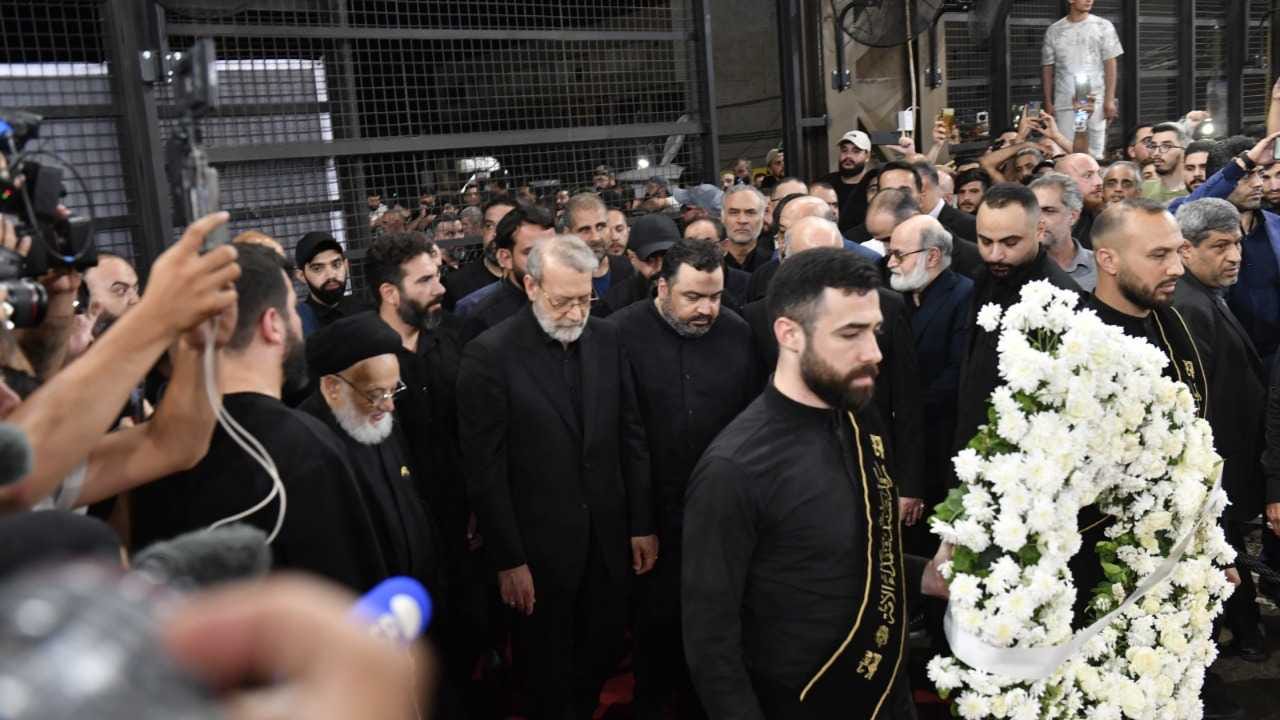
How the Regime Lost the Protections of Statehood
That is what made the Islamic Republic exceptional. It did not merely use proxies as a supplement to state power. It organised much of its regional strategy around them. It chose some of its closest allies from among militant groups, created others itself, and invested in turning them into extensions of its own reach. In doing so, it blurred the line between state and non-state actor until that distinction began to erode. It even sacrificed Iran’s national interests for the sake of those proxies to such a degree that it became hard to tell who was serving whom. Was Hezbollah a proxy of the Islamic Republic, or was the Islamic Republic, in some respects, acting for Hezbollah?
That erosion matters. A system that works through militias, arms transnational armed groups with long-range strike capability, and treats proxy warfare and terrorism as central tools of statecraft should not be surprised if others stop treating it like a normal state. Many of the groups backed by the Islamic Republic, including Hezbollah and Hamas, are designated as terrorist organisations by the United States, and in Europe, Hamas and Hezbollah’s military wing are also designated. The regime aligned itself with such groups, armed them, relied on them, and increasingly came to resemble the kind of actor it claimed merely to sponsor.
The Islamic Republic befriended terrorist groups, supported terrorist groups, armed terrorist groups, and in important ways came to behave like one. It should not be surprised that others increasingly treat it accordingly.
That is the real significance of what is happening now. Israel is not only fighting the Islamic Republic. It is classifying it. By choosing its targets, it is signalling that it does not see the regime as a normal Westphalian state entitled to the restraints that status usually brings. It sees it as the command centre of a regional militant enterprise.
One can debate whether that judgment is lawful. It is much harder to deny that the Islamic Republic spent decades inviting it.
Very apropos. Kissinger used to say that the Islamic Republic is not acting as a nation-state (if it were, it would not be exposing/subjecting Iran to destruction); rather as a revolutionary construct.
And the revolutionary construct must utterly be destroyed or it will destroy what’s left of Iran.