


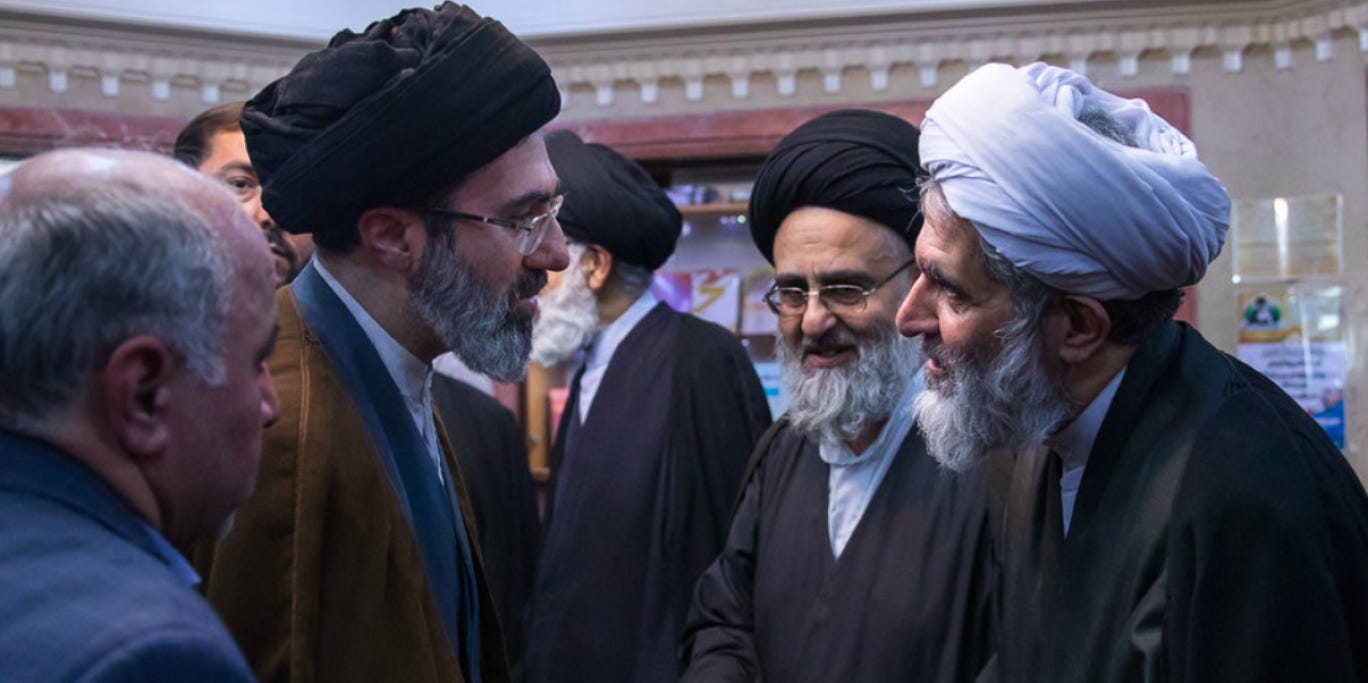
Iran’s new military appointments reveal a leadership consolidating control without changing course — at home, in the region, or in its underlying worldview.
On Monday, Mojtaba Khamenei formally announced six senior military appointments, putting on paper a command structure that had largely been operating for months.
Most of the appointments are less dramatic than the list might suggest. Some simply confirm arrangements already in place. Others are natural successions after senior commanders were killed.
One appointment stands apart: Hossein Taeb’s return as commander of the Basij.
On its own, it looks like a comeback. But alongside changes to the armed forces chief-of-staff position and Mohammad Bagher Ghalibaf’s more uncertain standing, it gives us the clearest indication yet of how Mojtaba intends to consolidate power.
The broader story is not that Mojtaba is building an entirely new ruling elite. He isn’t. War and assassinations have created vacancies across the Islamic Republic’s senior command, and the regime is filling them largely from the same old-guard network that has run the system for decades.
But where Mojtaba has room to choose, his choices are revealing. Taeb is the clearest example.
Taeb: The Confidant Who Never Really Left
Hossein Taeb’s relationship with Mojtaba goes back to the Iran-Iraq War, when both served in the Habib bin Muzahir Battalion. Other members of this wartime network later became powerful figures in Iran’s security establishment, including Qassem Soleimani and Hossein Nejat.
That relationship survived every stage of Taeb’s career, including his removal as head of IRGC Intelligence in 2022. His departure followed a series of assassinations and security breaches inside Iran attributed to Israel.
A failure on that scale might have ended another official’s career. It did not end Taeb’s access to Mojtaba.
Taeb’s return therefore matters less as a political rehabilitation than as evidence of where Mojtaba’s trust lies.
It also matters because of the institution he now commands.
The Basij is the regime’s main mass-mobilization force and a central instrument of domestic repression. Its importance was clear two months before Ali Khamenei’s death, when Iran faced its most significant popular uprising in decades. Thousands were killed in the crackdown, with the Basij playing a central role.
Putting one of his oldest and most trusted confidants in charge of the Basij is not a consolation prize for a former intelligence chief. Under current conditions, it is one of the most politically important security positions in Iran.
And Mojtaba went further. At the same time, he expanded the Basij’s own intelligence powers.
That is particularly significant because Taeb is an intelligence operator by background, rather than a battlefield commander. He now controls a major domestic coercive institution with greater powers to identify and monitor potential threats.
Of Monday’s six appointments, this is the one that most clearly carries Mojtaba’s personal imprint.
The Chief of Staff Merger: Undoing a Workaround
Ali Abdollahi’s appointment as armed forces chief of staff came with another important change. Mojtaba brought the Khatam al-Anbia Central Headquarters, Iran’s top operational military command, back under the chief of staff.
The change looks dramatic. But its origins are more straightforward.
The two commands were separated in 2016 largely to resolve a personnel issue. Ali Khamenei wanted Mohammad Bagheri as chief of staff, but Gholam Ali Rashid outranked him. Khamenei resolved the rank conflict by splitting the commands: Rashid took Khatam al-Anbia, while Bagheri became chief of staff.
Both men were later killed during the war. The original reason for keeping the two commands separate therefore disappeared.
Mojtaba has now reunited them.
The change gives Abdollahi greater operational authority, but it should not necessarily be seen as evidence of a new military doctrine. To a large extent, Mojtaba is undoing a structure created to address the seniority of two particular officers.
The Emerging Power Map
Taken together, the appointments suggest that a hierarchy is beginning to form around Mojtaba.
At its center are Mojtaba himself, Hossein Taeb and Mohsen Rezaei, who increasingly appear to form the political-security core around the new supreme leader.
Mohammad Bagher Ghalibaf and Ahmad Vahidi remain important, but their positions appear less dominant. Ghalibaf, in particular, looks relatively diminished by the renewed prominence of Taeb and Rezaei. His only formal position, Speaker of Parliament, gives him no direct military command.
But Ghalibaf’s position is more complicated than a simple loss of power.
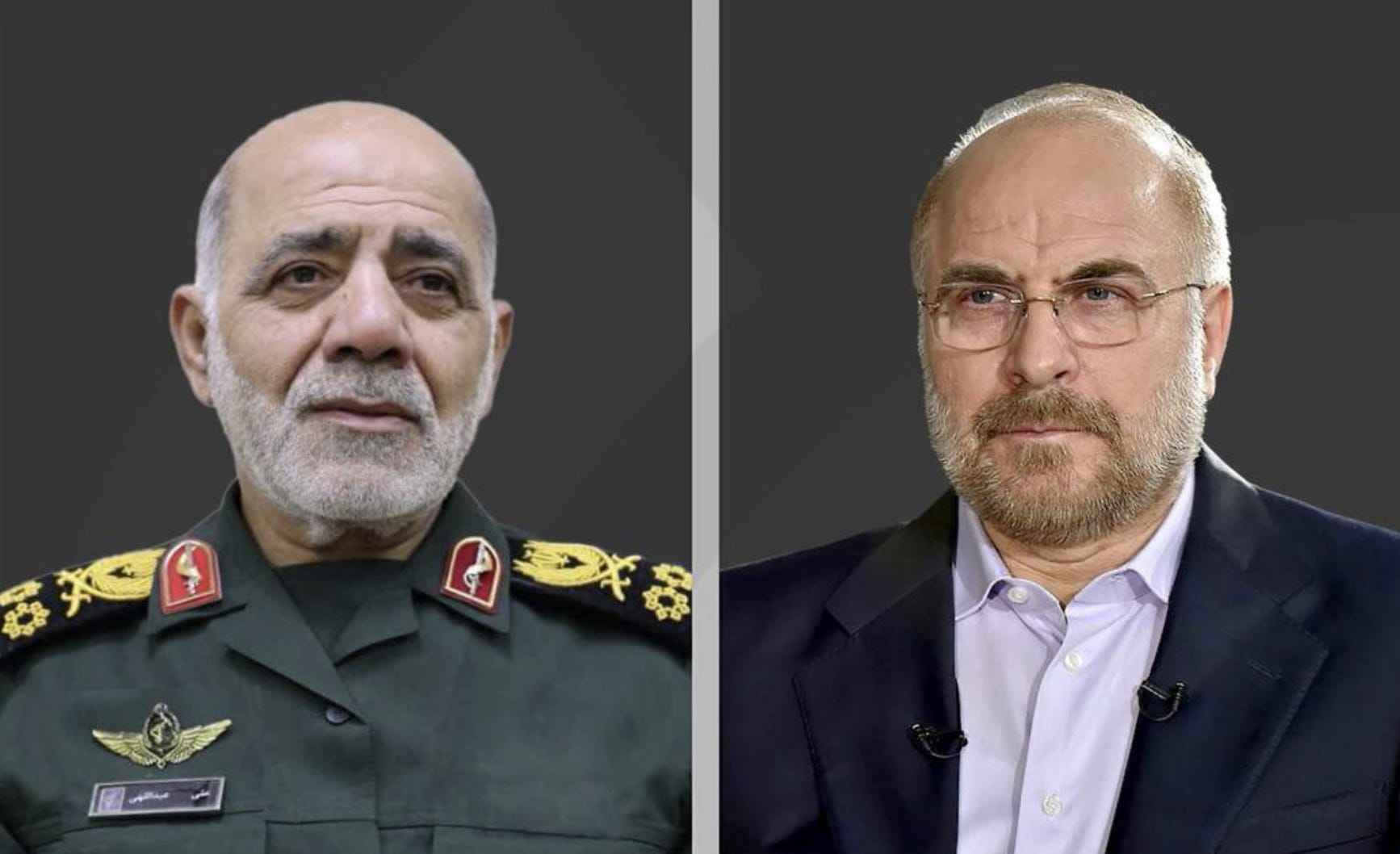
Ali Abdollahi is a longtime Ghalibaf associate. He served as his deputy in the IRGC Air Force in the late 1990s and later as deputy commander of the national police when Ghalibaf headed the force.
Abdollahi now holds one of the most powerful positions in Iran’s military establishment, and the return of Khatam al-Anbia under his command has made that position even stronger.
So while Ghalibaf’s personal standing at the top may have weakened, the network he built still has considerable institutional weight.
What the Other Appointments Tell Us
Several of Monday’s appointments look more like institutional continuity than factional maneuvering. That is important because it provides a baseline against which Taeb’s appointment stands out.
Kioumars Heydari, deputy chief of staff: His appointment follows the established practice of pairing an IRGC chief of staff with an Artesh deputy. It looks more like institutional balance than a factional signal.
Mostafa Izadi, deputy commander-in-chief of the IRGC: A long-serving and well-regarded commander who is also personally loyal to Mojtaba. His appointment reflects continuity and his existing standing within the system more than a major shift in power.
Ali Azmaei, IRGC Navy commander: Perhaps the most straightforward succession. He was already Alireza Tangsiri’s deputy and inherited the post after Tangsiri’s death. He also has his own combat record, including fighting US forces in 1987.
Succession by Attrition, Consolidation by Choice
Nearly everyone now occupying Iran’s senior military and security positions comes from the same establishment that has sustained the Islamic Republic for decades.
Mojtaba, Taeb, Rezaei, Ghalibaf, Vahidi and Abdollahi do not represent a new ideological movement. They are products of the existing system.
What changed was the availability of positions.
Mousavi, Pakpour, Bagheri, Rashid, Nasirzadeh, Khademi, Tangsiri, Salami and others were removed through war and assassination. Their deaths forced a reshuffling of the senior command that the leadership did not choose.
This is succession by attrition, not by design.
But attrition also created an opportunity.
Mojtaba inherited vacancies across a security establishment his father had shaped for decades. He now has the chance to decide who fills some of those positions and how power is divided among them.
Where institutional convention largely dictated the choice, he followed convention. Where battlefield succession produced an obvious replacement, he largely accepted it.
But at the institution most directly involved in protecting the regime against domestic unrest, he made a very different choice.
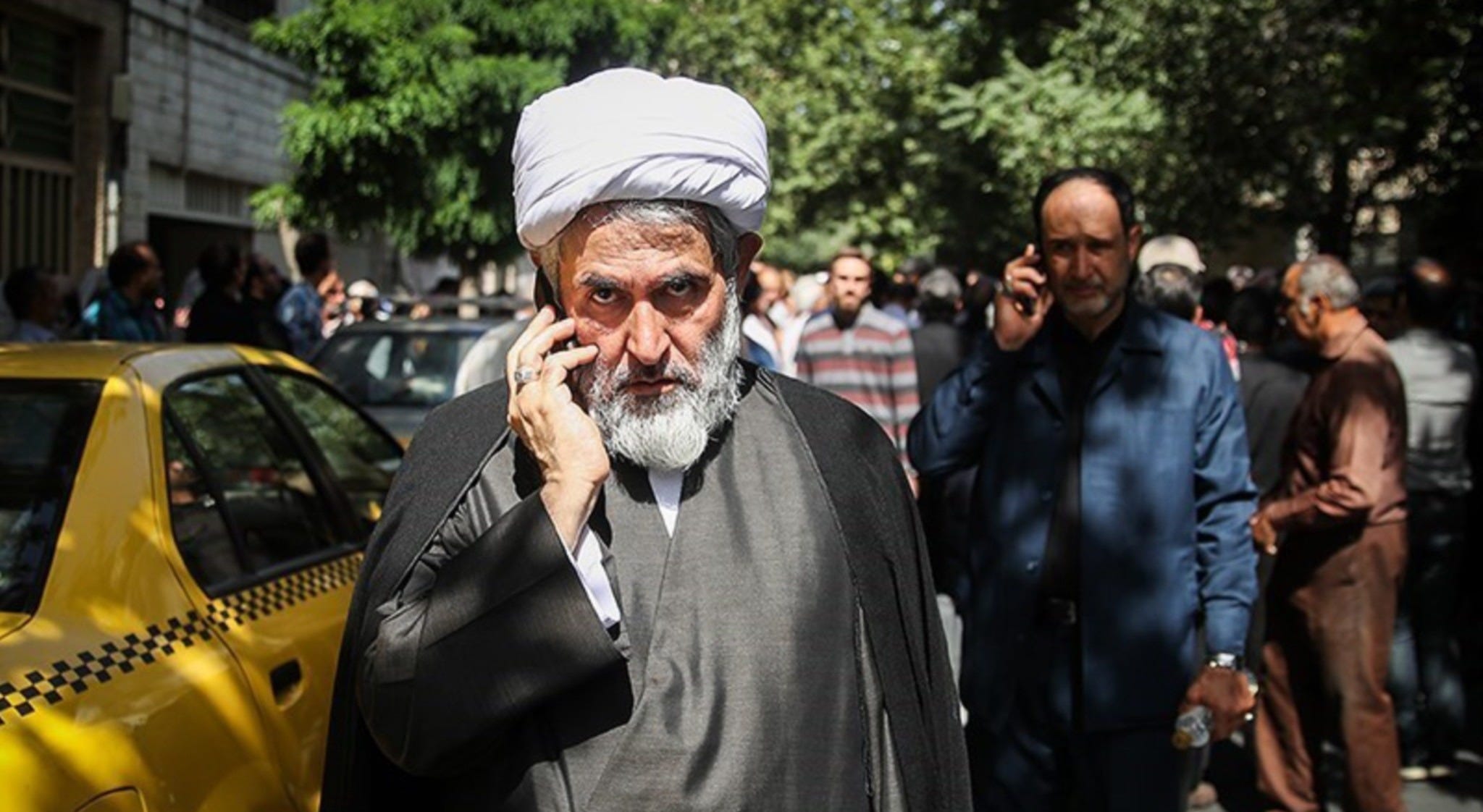
He installed one of his oldest and closest confidants. At the same time, he increased that institution’s intelligence powers.
That tells us more about Mojtaba’s emerging system than the other five appointments combined.
What It Means
At home, the signal is clear. After the January uprising, the leadership is strengthening the machinery of repression rather than reconsidering it.
Taeb’s return suggests that Mojtaba sees domestic unrest as a central threat to the system's survival. He wants someone he knows and trusts personally in charge of a key part of the response.
On foreign policy, there is little evidence of ideological change. The officials taking these positions come overwhelmingly from the same security establishment. They share its basic assumptions about the United States, Israel and Iran’s role in the region.
That does not rule out negotiations or temporary compromises. But there is nothing in these appointments that points to deeper strategic moderation.
Great info, but I still have questions
I believe that Iran's economy is tanking to the extent that IRGC soldiers are not being paid, food is very short, especially in Tehran where there is also water shortages, so how long can this consolidated regime survive? I also would like to know if Israel is still targetting Iranian leaders. Sorry to pepper you with questions, but I think economic collapse is key to Iranian (as opposed to foreign imposed) regime change and everything points to a collapse, but in the back of my mind I wonder if Oman or Pakistan would take measures to stave off that collapse to maintain that fundamentalist regime. I'd love to hear your thoughts.