


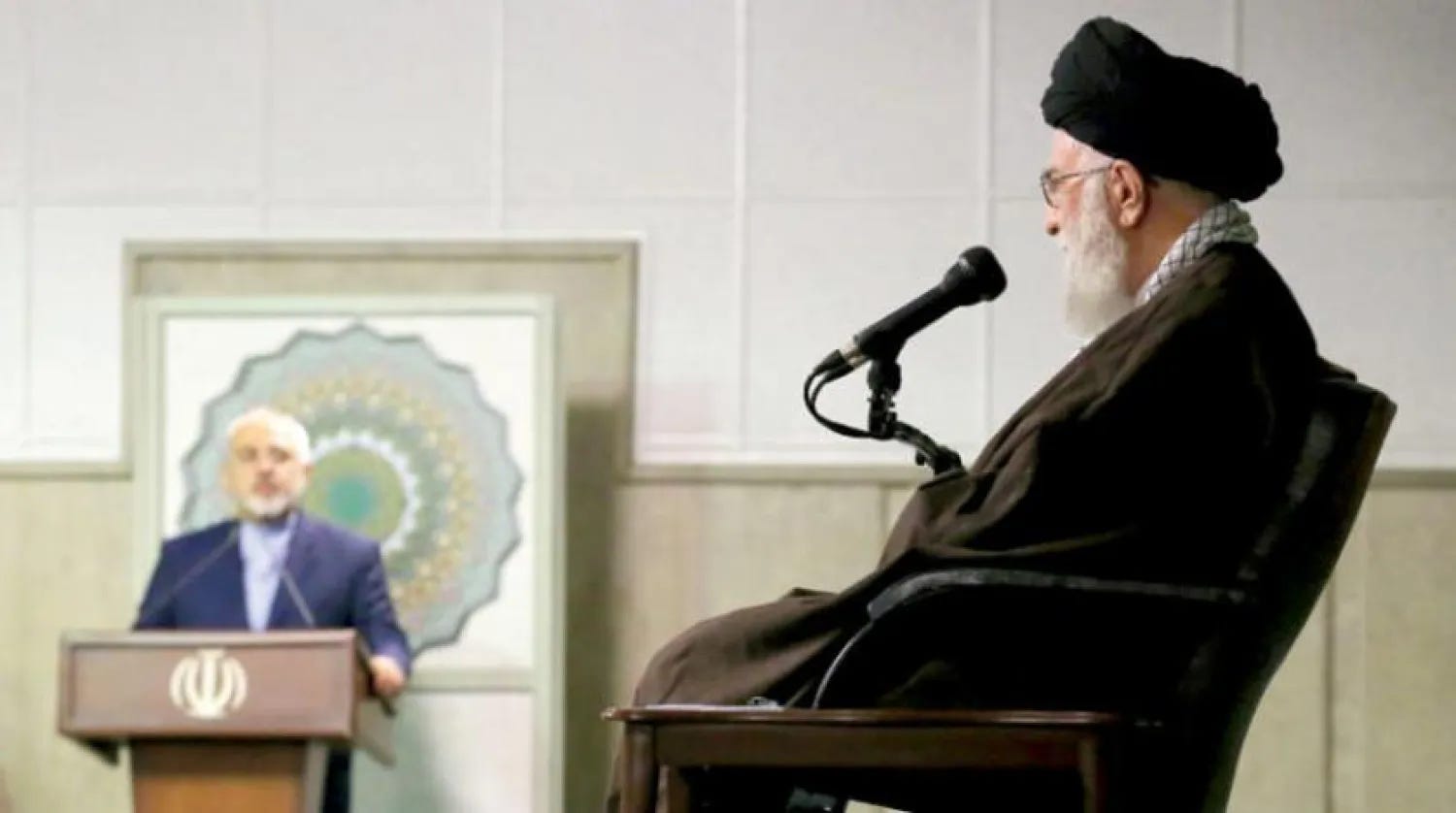
Javad Zarif’s recent article in Foreign Affairs matters. But not for the reason he intends.
Zarif presents himself as the man offering a way out of the war. He argues that Iran should accept limits on its nuclear program, reopen the Strait of Hormuz, restore oil sales, rebuild economic ties, and sign a permanent nonaggression pact with the US. On paper, this looks like a diplomatic opening. In reality, it looks like a late signal from a system under pressure that still does not understand how much the strategic ground has changed.
In a leaked message he sent just days after the war began, Zarif made clear that he was not speaking from the center of power. He said nobody from the foreign ministry had even called him. He said any proposal from him was pointless. He said he was ready to take what he called a suicide mission by putting a deal on the table anyway, knowing the attacks it would bring him at home. He also argued that symbolic gestures could defuse the crisis and that Trump wanted an honorable exit and had no patience for lengthy, detailed plans.
Anyone who knows Zarif and knows the structure of the Islamic Republic would understand that a piece like this does not appear in Foreign Affairs without at least some blessing from inside the system. So the article should not be read as the private fantasy of a retired diplomat. It is better read as a signal that, despite all the hard talk, parts of the regime now want to talk. But it is also a signal that those same people still do not understand the moment they are in.
The negotiations timeline makes the problem plain. Nearly a year ago, Trump opened talks with the Islamic Republic. We now know what he wanted: full dismantling of the Islamic Republic’s nuclear program, real limits on its missile program, the effective end of its proxy network, and an end to its hostility toward Israel. The regime refused. Then came the 12-day war. Trump stopped it and gave them another chance. A few months later, negotiations resumed. The demands had not changed. Nor had Tehran’s answer. So the US and Israel attacked again. Now Zarif returns with what is, in substance, the old Iranian formula: the Islamic Republic keeps its core capabilities, offers partial nuclear limits, and asks for relief in return.
From the Trump and Netanyahu point of view, this is not a serious bargain. It is a bad deal. Tehran would gain relief, time, and legitimacy while the deeper structure of the conflict remained in place.
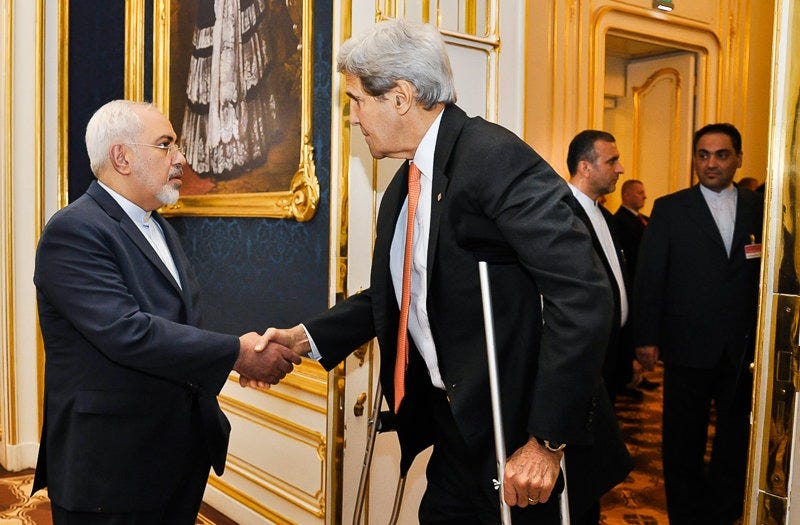
Zarif writes from another age. His article reflects the old habits of the Islamic Republic’s foreign policy. But the region after October 7 is not the region of the JCPOA years. And the people now facing Tehran are not Obama and Kerry. They are Trump and Rubio. Israel’s view of the Iranian threat has changed in a basic way. Washington’s tolerance for Tehran’s nuclear and missile programs and its regional model has narrowed sharply. The old language of face-saving diplomacy no longer fits the battlefield or the politics around it.
That same failure appears in Zarif’s reading of Trump. In the leaked message, he says Trump needs an honorable exit and lacks patience for complex and detailed plans. This is a familiar mistake in Washington and in the U.S. media. I hear that a university professor in Washington contributed heavily to Zarif’s article. That matters because Zarif’s reading of Trump does not come from him alone. It reflects the same short-sighted view that has shaped much of the American media and political ecosystem for years. They portrayed Trump as vain, impatient, and easy to flatter. They said he opposed Obama’s Iran deal only because Obama made it. They said he would accept an even weaker deal if Iran only gave him a photo opportunity. That argument was repeated again and again. It was always shallow. Trump’s focus on the Islamic Republic has been far more consistent than they understood. The same is true of the people around him. Anyone who followed Marco Rubio’s past remarks on the Islamic Republic should have known that this administration was not looking for symbolism. It was looking for rollback.
Zarif wanted his article to sound like strategy. It reads instead like an outdated response from a political class that still has not understood how much the ground has moved beneath it. Those praising it or taking it seriously are making the same mistake.
Zarif is a diplomat wannabe. Pure and simple. Not only does he insist of being treated as a diplomat, but also as a scholar of international affairs in the same league of a Kissinger and his one-time opponent, Zbig Brezezinski. Well, he is neither. Neither is he a Andrei Gromyko, the top-notch foreign minster of the Soviet Union. And no, he is not even a Molotov or a Dean Acheson or a George Kennan.
He is a failed student who stormed the San Francisco consulate in the wake of the 1979 revolution. Owing to his accented English--considered an asset in a regime with a few fluent English speakers, let alone those with an American or British accent--he thought he could untie the Iran-US knot, not appreciating that Gromyko, Kenna, Zbig, Kissinger were "one of the boys in the top power structure", whereas Zarif never was. This is important.
I have a suspicion that he was aided by a Vali Nasr or his a member of his cohort, Trita Parsi or some other flunkies--these are my personal views--who are part of the "amen corner" of the Islamic Republic in the DC political arena.
The Islamic regime is now a regime not led by the clergy, rather by mid-level and a handful of top line revolutionary guards. The putative homosexual supreme leader, Mojatab Khamenei, is the hidden "messiah" of a system that is fighting tooth and nail for its survival.
The biggest catastrophe on this moribund system will occur when the war ends and these bandits will have to manage a broken economy and body politic.
I support Reza Pahlavi for the efforts he has marshaled to present himself as an alternative, but I am mindful of the history of Iran wherein an "unknown" quantity rises to the surface and rescues the nation. For those familiar with Iran's history, I am referring to Nader Shah and Reza Khan.
Both these individuals belonged to the praetorian guards of their respective dynasties: Nader Shah to the Qezelbash of the Safavid Dynasty and Reza Khan to the Qajar Dynasty.
These praetorian guardsmen had sworn to protect the sovereign but in a moment of enthusiasm, they took the baton and re-positioned Iran on an even keel.
I can see a new man to emerge and who know, have Reza Pahlavi as part of his act.
Why?
1. Because the new emergent person is unknown outside Iran and needs a fresh face; and
2. Reza Pahlavi needs a person who has access to the levers of power.
A combination of a modern face and intra-regime capabilities.
Then, America and Israel MUST help the duo and rebuild Iran. An Iran, which once back on its feet, will be the West's strongest friend, bar none. Not Turkey, nor Germany, nor France and nor Britain.
Zarif is a thug pretending to be a diplomat. A snake like thug! But he also suffers from delusion like the rest of the opium gang running Iran.