


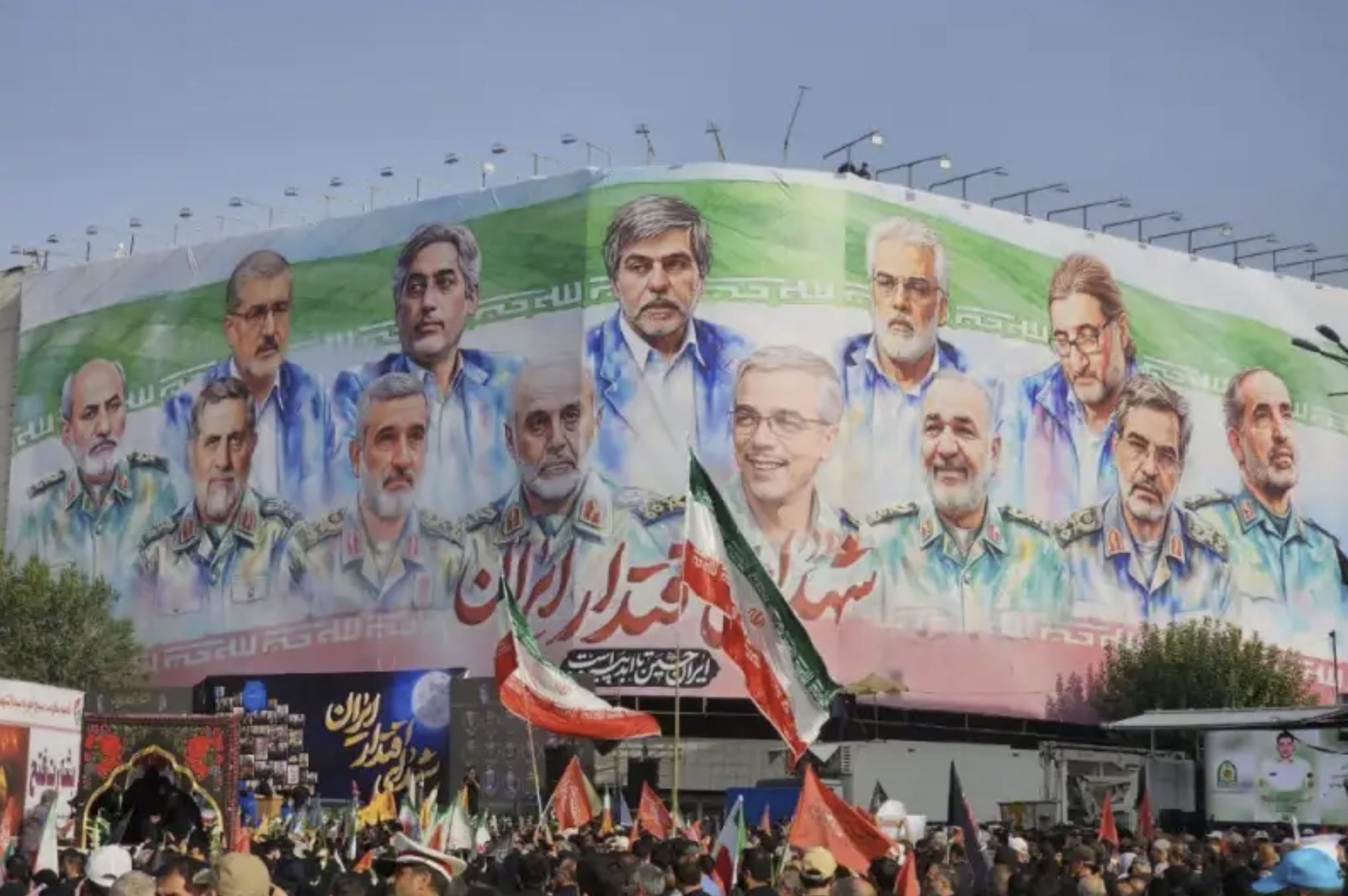
Power in Tehran has moved even further away from elected institutions and into the hands of the security state. The presidency and parliament still exist, but they no longer appear to be where decisive choices are made. What matters now is the surviving security establishment, its reading of the war, and the worldview that has shaped the Islamic Republic for decades.
That worldview is simple: the regime does not see compromise with the West as a political bargain. It sees compromise with the West as a threat to its survival.
President Masoud Pezeshkian was never the central figure in the system. Since the war, he has become even more irrelevant. Mohammad Bagher Ghalibaf, despite serving as speaker of parliament and briefly emerging as the chief nuclear negotiator, also appears increasingly sidelined. Since the Islamabad talks with Vice President J.D. Vance in April, his public language has turned defensive. He keeps trying to prove his loyalty and explain himself, while other regime figures attack him over the nuclear file. That says a great deal about where he stands.
The presidency and parliament still exist, but they no longer appear to be where decisive choices are made
The situation around Mojtaba Khamenei remains opaque. The secrecy surrounding him has sparked intense speculation about his health, his channels of contact, and his actual role. If he is alive and politically active, his ability to govern appears severely restricted for security reasons. A leader who cannot speak, meet, or project authority is, in practical terms, a non-existent leader.
This creates a deeper problem for the Islamic Republic. The theory of Velayat-e Faqih, the system’s founding political doctrine, rests on the idea that the Supreme Leader derives legitimacy from the Hidden Imam and governs as his deputy during the Imam’s occultation. But now, even the deputy of the Hidden Imam is hidden.
That places the Islamic Republic in an unprecedented position. In the resulting vacuum, power has shifted toward the hardest elements of the security establishment. Figures such as IRGC commander Ahmad Vahidi, Mohammad Bagher Zolghadr, Secretary of Iran’s Supreme National Security Council, and Hossein Taeb, the former head of the IRGC Intelligence Organization and a close confidant of Mojtaba Khamenei, are now calling the shots in Tehran.
They are veterans of the Islamic Republic’s security apparatus: deeply ideological, security-driven, and convinced that compromise with Washington is incompatible with the system’s survival.
They believe they won the war. That belief is not baseless. President Trump may have expected that the killing of Ali Khamenei and the damage to Iran’s military structure would push the regime toward compromise. But the abrupt ceasefire allowed the remaining leadership to present survival as victory.
There are many possible explanations for Washington’s current course. President Trump clearly had his reasons for announcing the ceasefire. But those reasons do not change the consequences of the war, the regime’s survival, or Tehran’s interpretation of the outcome. What matters now is not why it happened, but what it produced.
That leaves Trump with three choices: continue the blockade, make a deal with the current regime, or restart the war. None offers an easy exit. Each carries significant consequences for the United States, the region, the world, and the Iranian people.
The Blockade
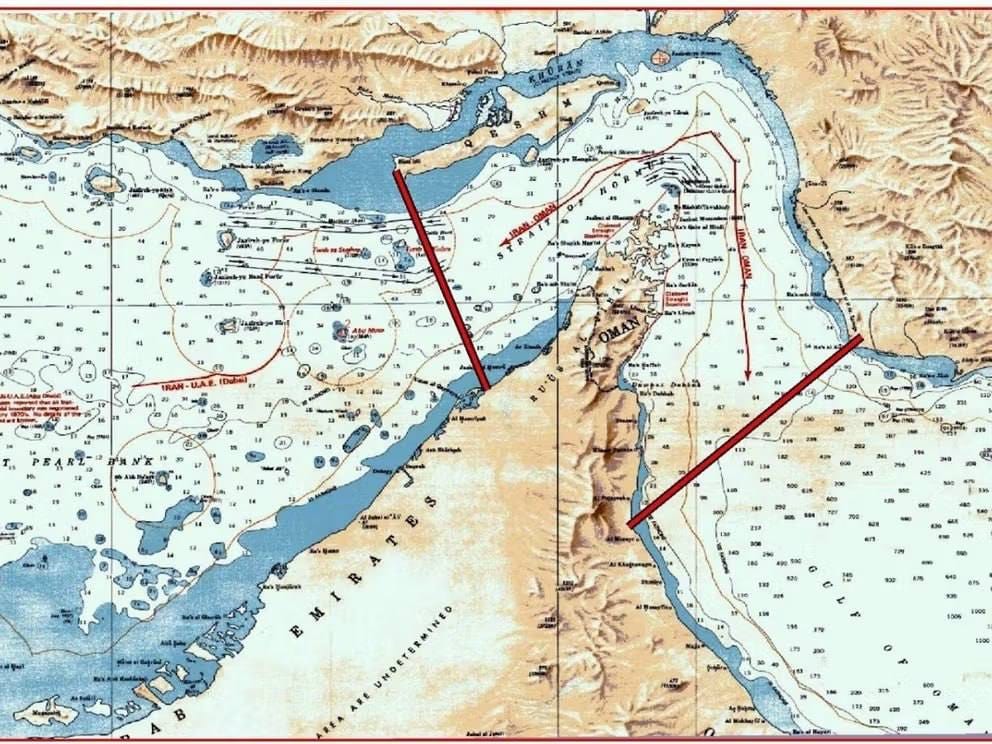
He can continue the blockade and pressure campaign. That will hurt Iran, but it will also hurt the global economy, because the Strait of Hormuz is also blocked by Iran. That is not a durable position. Tehran is already saying the Strait will not return to its previous regime of free passage. Even if the United States lifts the blockade, Iran will impose a new reality, allowing ships to pass only on its terms, including tolls. Iran is adamant about this, and there is no reason to assume it is bluffing.
The Strait of Hormuz will not return to the previous arrangement through talks and negotiations. That is a hard reality the United States and the world will soon have to face.
The Deal
Trump can make a deal with the current regime. That may look like the easiest diplomatic exit, but it would carry a high strategic cost for the region and for America’s standing in the world. Any agreement acceptable to Tehran would certainly require sanctions relief, the release of frozen assets, and acceptance of new rules in the Strait of Hormuz. In practice, Washington would be giving resources to a regime that believes it has just won a war with the United States and Israel. Tehran’s conclusion would be clear: expanding the war regionally worked, escalation worked, and the infrastructure that made both possible must be rebuilt.
The lesson would not stop in Tehran. China is watching these developments closely. For Beijing, the Iran war has become a live test of American power, endurance, and resolve. If Washington is forced to settle on terms that look like capitulation to Tehran, the implications will reach far beyond the Middle East. How can the United States credibly pivot to Asia and contain China if it cannot impose its will on Iran?
The region will also pay a high price. Oman, the UAE, Qatar, Bahrain, Saudi Arabia, and Kuwait must kiss goodbye to their dreams of becoming prosperous, attractive hubs for the world. No serious global company will invest with confidence in a region where the Strait of Hormuz can be taxed or blocked by the IRGC, and where the same IRGC emerges more assertive and emboldened after such a deal. As long as the Islamic Republic and the IRGC remain in place, these countries should think twice before investing even their own money in major infrastructure, let alone expecting global investors to do so.
Expanding the war regionally worked, escalation worked, and the infrastructure that made both possible must be rebuilt.
For Iranians, the deal would be devastating. The country has been without normal internet access for nearly two months, and that will most likely remain the case. Elected institutions have become even less relevant. The IRGC had the upper hand before the war; now it is the only functioning hand. Executions and repression continue. Cash flowing into this structure would not moderate it. It would strengthen it. Such a deal would leave the Iranian population facing a regime that killed thousands of them in a major countrywide protest in early January. The message would be sober and brutal: the regime can kill thousands of its own people and still force a deal on the United States.
It would also create serious problems for Israel. A diplomatic agreement would not only reopen financial channels for Tehran; it would make future Israeli strikes harder to justify and harder to carry out. Negotiations and deals have often served as a political shield around Iran’s nuclear program. During the Biden years, while Washington was still trying to restore an agreement, Iran dramatically expanded its stockpile of highly enriched uranium. Earlier, after Obama’s Iran deal, Israel faced greater pressure to restrain operations that could have threatened the agreement, including sabotage and intelligence activity related to Iran’s missile and drone programs.
If a new deal is struck now, restricting further Israeli strikes would almost certainly be part of the bargain, either formally or informally. Such an outcome would also shape the calculations of future American presidents. After a failed or inconclusive military operation, future administrations would be even more hesitant to use force against Iran.
No mistake in war is free of cost. The United States was winning the war until March 17, but then it suddenly shifted from pressure to courtship and negotiation. In doing so, it inadvertently empowered and hardened the very leadership it had weakened.
Washington now faces the price of that misreading. Any deal under the current balance of power that falls short of its initial demands will be seen as a defeat for the United States. Fighting and flirting with a fundamentalist regime do not mix. The United States appears to be learning that again, this time the hard way.
This leaves the third option: restarting the war.
The Harder War
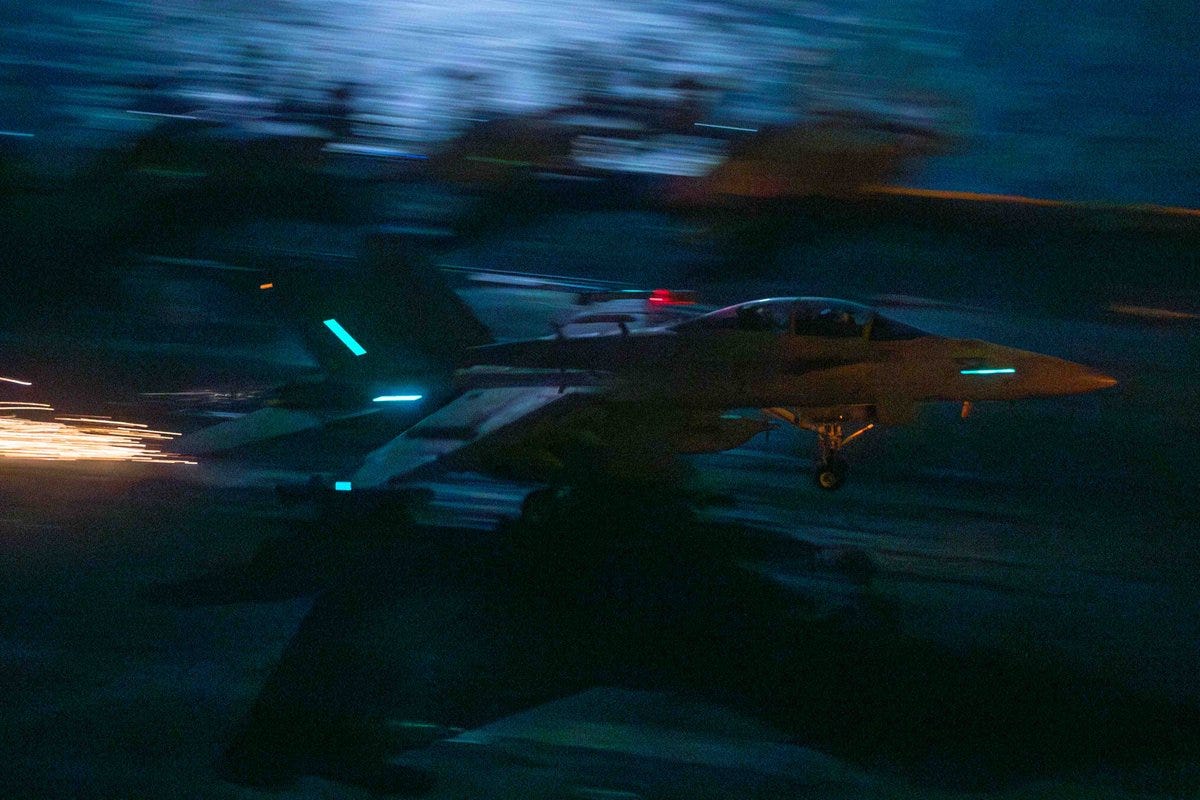
That would not be easy now. In many ways, a second round would be harder for Washington. Two months ago, Tehran was hesitant to engage in a direct confrontation with the United States. Today, parts of the Iranian establishment appear far more confident in their ability to absorb military pressure and survive it.
Any renewed campaign would have to be much harder from the start. It would need to show immediately that this is not a repeat of the previous confrontation, but a more intense conflict aimed at changing the regime’s strategic calculus. Limited strikes on infrastructure alone are unlikely to do that. The Islamic Republic’s core security establishment is deeply ideological and has historically shown a high tolerance for economic and infrastructural damage.
From Tehran’s perspective, the survival of the regime matters more than the economic survival of the country itself.
That creates a central dilemma for Washington. If military pressure is intended to change the system’s behavior rather than merely punish it, then the pressure would have to focus on the power structure that sustains the system, not merely on physical infrastructure.
Iran’s ruling establishment is unusually concentrated. For decades, a relatively small circle of revolutionary-era figures has rotated through the highest political, military, and security positions, shaping the state’s direction and preserving the ideological foundations of the system. As long as that old guard remains dominant, meaningful strategic change is unlikely.
From Tehran’s perspective, the survival of the regime matters more than the economic survival of the country itself.
Yet this concentration of power has also created a structural weakness. The Islamic Republic built an authoritarian system designed to prevent the emergence of alternative centers of authority. That helped the revolutionary elite preserve control, but it also prevented the rise of a broadly legitimate next generation of leadership. Beneath the aging core of the regime, there is no equally authoritative successor class waiting to take its place.
Iran would also likely escalate the war horizontally if another round begins. It would target countries across the region, especially the Arab states. But those states are now caught between a rock and a hard place. They must either accept the long-term consequences of living with an emboldened Islamic Republic or accept the shorter-term costs of changing its behavior.
That is not an easy decision. War costs. But sometimes peace costs more.
How would Iran pull this off, i.e., "Tehran is already saying the Strait will not return to its previous regime of free passage"? Where does Iran have leverage militarily? Am I missing something?
Money talks and bullshit walks. Who is funding the ‘regime?’ This article is slop.