


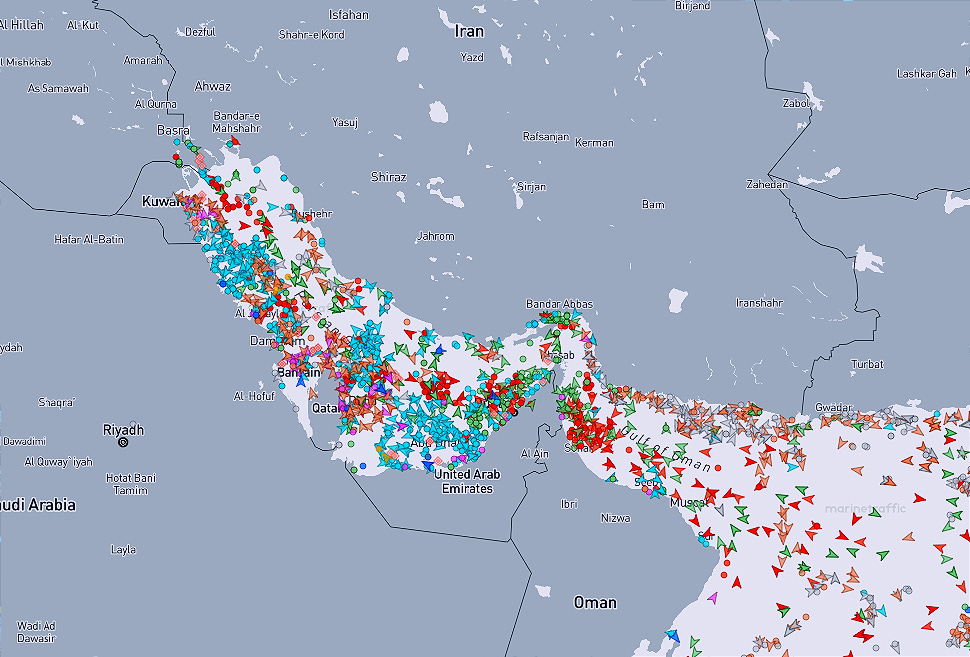
The Islamic Republic is causing significant pain in the regional and global economy through the closure of the Strait of Hormuz. Even Iranian officials seem surprised by the scale of leverage this chokepoint provides.
“The Strait of Hormuz is Iran’s atomic bomb,” said Ali Nikzad, deputy speaker of Iran’s parliament, on May 1. “The Strait will never return to its pre-war state.”
There are signs that Iran is looking at control of the Strait of Hormuz as a long-term plan. Some officials see it as a potential source of income, with ideas of turning it into something like the Suez Canal through transit fees. They are also looking at it as a strong deterrent, linking their future security to it.
Closing the Strait is a weapon Iran can only use once.
However, that strategy is both reckless and short-sighted. Closing the Strait of Hormuz is a blunt tool, effective only in the short term. The global supply chain will eventually adapt, and Iran will end up empty-handed in the long term.
Closing the Strait is a weapon Iran can only use once. In the long term, consumers will find more stable supply routes, cargo will be rerouted, and energy consumers will shift toward other sources - at a cost borne across the entire Middle East, including Iran.
As Fatih Birol, executive director of the International Energy Agency (IEA), said, the Strait of Hormuz is now like a broken vase. “The damage is done. It will be very difficult to put the pieces back together. This will have permanent consequences for global energy markets for years to come.”
Alternative Routes
The first consequence will be an immediate and heavy investment in alternative routes.
Iraq, the most severely affected regional country from the closure, has started work on a pipeline linking Basra to Haditha, with a capacity of 2.5 million barrels per day (bpd). Around $1.5 billion has been allocated to the 700-kilometer pipeline connecting Iraq to Syria, Turkey, and Jordan.
Investment in alternative routes was not seen as economically feasible only a few years ago, but now it appears to be a strategic priority for many nations, and the IEA is strongly endorsing such projects.
Exports through alternative pipelines in Saudi Arabia, UAE, Iraq, and Türkiye have increased from 4 million bpd to 7.2 million bpd since the start of the war, according to the IEA.
What was once economically impractical is now becoming a strategic priority.
Alongside pipelines, cargo can be rerouted over land or through alternative corridors. MSC Mediterranean Shipping has already unveiled a new multimodal service linking Europe with Persian Gulf ports while bypassing the Strait of Hormuz.
The route will call at European ports, transiting the Suez Canal into the Red Sea, then stopping at Jeddah or King Abdullah Port in Saudi Arabia. From there, cargo will be transported overland by truck across the kingdom to Dammam on the Persian Gulf coast.
At Dammam, containers will be transferred onto smaller feeder vessels for onward delivery to regional hubs, including Abu Dhabi and Dubai’s Jebel Ali.
Alternative Sources of Energy
But more painful for the region is the shift by global refiners away from Middle Eastern Gulf crude grades, and more profoundly, the accelerating move away from fossil fuels toward solar and nuclear energy.
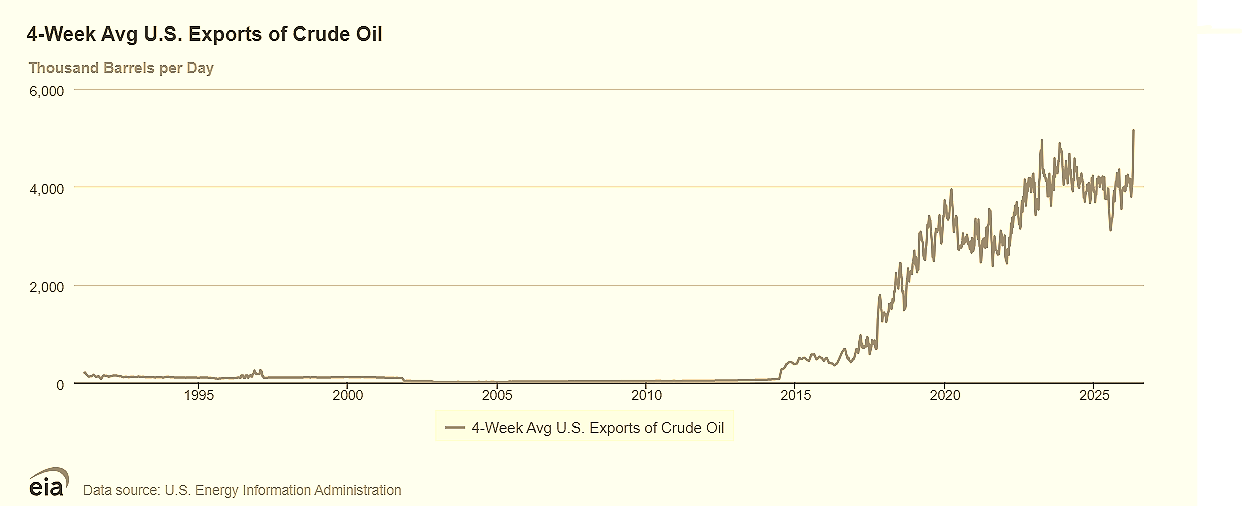
Some consumers have now shifted to the US as a supplier. Trump said in April that “large, empty oil tankers are sailing to the U.S.” to take American crude, which he called the “sweetest” oil. The US export figures support that.
Pakistan’s oil minister said the country has begun diversifying its energy sources, importing crude from the United States and Nigeria despite higher freight rates, and is looking into purchases from Libya.
India is suffering from an acute nationwide shortage of cooking gas (LPG), with many restaurants shut down and public discontent growing. India has realized that it has been too reliant on Middle Eastern output - roughly two-thirds of India’s 2025 LPG use was supplied from the Gulf. It will certainly diversify its imports in the coming years to hedge against risk.
The same dynamic played out in Europe when many countries realized after the war in Ukraine that they had been too reliant on Russian gas. Since then, they have invested heavily in alternative energy sources, including US LNG.
China has been reducing its reliance on the Strait of Hormuz over the years. It has diversified supply toward Russia, Africa, and Latin America, and has recently invested trillions of dollars in green and nuclear energy. The closure of Hormuz will only accelerate this trend.
The closure of the Strait of Hormuz has changed the fossil fuel industry forever, according to IEA’s Birol. “Governments will review their energy strategies. There will be a significant boost to renewables and nuclear power and a further shift towards a more electrified future,” he told the Guardian in April. “And this will cut into the main markets for oil.”
Iran’s control over the Strait, its generation of revenues from it, and linking its long-term security to it are naive dreams. Iran’s use of this weapon will have the most severe consequences for the region and Tehran.
The Islamic Republic has made this mistake repeatedly. It creates leverage, but overuses it, turning an asset into a threat. In doing so, it often produces the opposite of its intended effect, leaving the world with no option but to see that leverage as a threat that cannot be ignored.
“Iran’s usage of this weapon will have the most severe consequences for the region and Tehran.”
Iran’s insistence on continuing the war with Iraq in the 1980s, despite early victories, helped form a strong alliance around Saddam Hussein. Iran’s long pursuit of a nuclear program has lost its value as a bargaining tool and has instead turned into a liability. Iran’s other deterrents, including the proxy groups it cultivated across the region, not only failed to protect the Islamic Republic, but also became one of the main reasons for the US and Israel attacks against it.
The global economy thrives on predictability and stability, and it will not succumb to uncertainty or to restrictions that Iran might randomly impose on tankers based on their type, flag, charter, upstream producer, or destination.
By closing Hormuz, Iran has not discovered a deterrent as strong as a nuclear bomb. It has opened a poisonous well that will soon pollute its own livelihood and that of the whole region.
I am sorry but pipelines and overland truck routes are uneconomical. A temporary measure.
In other words, the Grand Strategy has completely and utterly failed.