


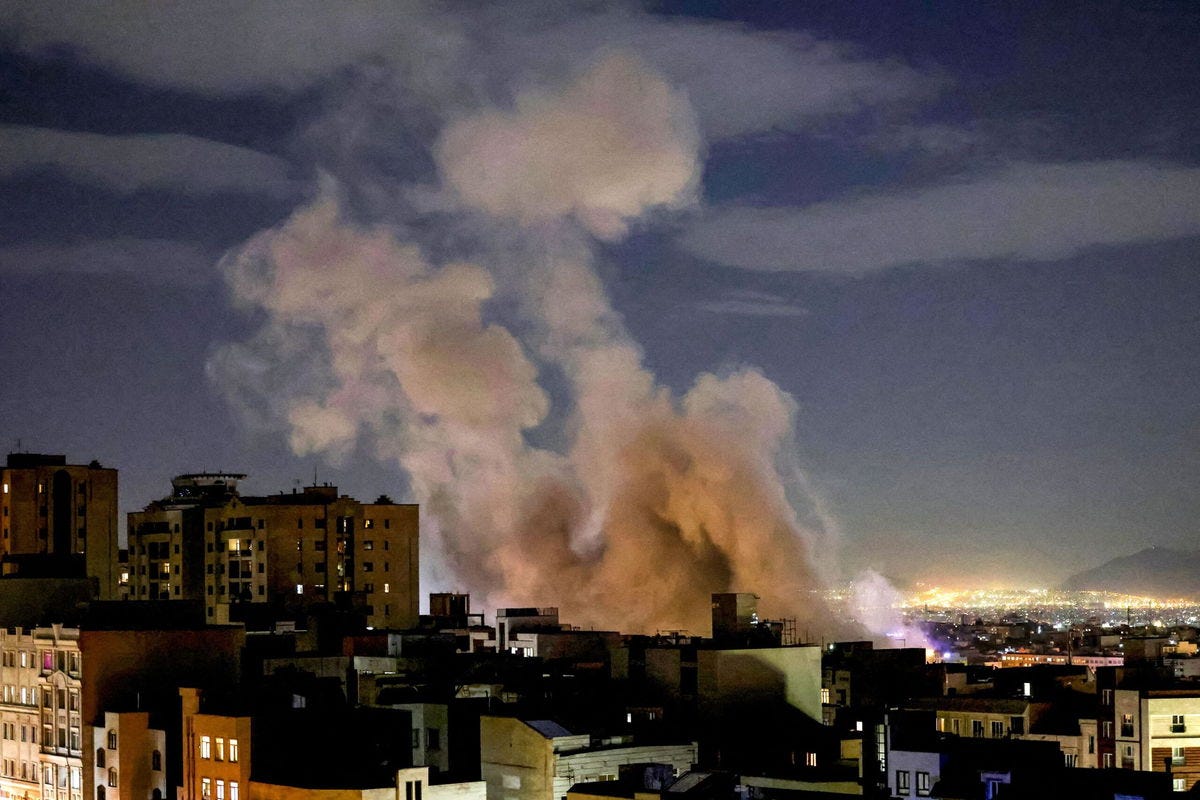
Much of the commentary on Iran today is driven by battlefield metrics: missiles and drones launched, US bases attacked, and parts of the so-called Axis of Resistance still operating. These indicators matter, but they capture only the visible movement of the war. To borrow a term from the markets, they amount to a kind of technical analysis. What is missing is a more fundamental analysis of the setting in which this war is unfolding: the setbacks the Islamic Republic has suffered, the political ground it has lost, and the conditions under which it is now fighting. No serious investor would judge a company by price movements alone while ignoring the balance sheet.
This war did not strike the Islamic Republic in a vacuum. It struck a regime already burdened by a series of major setbacks over the past three years. The joint US-Israeli attack became possible only after those earlier setbacks changed the landscape.
The Islamic Republic is known for its resilience. From its earliest years, it has survived assassinations, coup attempts, eight years of war with Iraq, crippling sanctions, and repeated nationwide uprisings. Over the decades, analysts and opposition figures have often said that the regime was nearing collapse. Yet nearly half a century later, it is still in power.
Now it is in direct confrontation with the world’s most formidable military power, the United States, and the region’s strongest army, Israel. After a month of intense bombing, after the loss of the Supreme Leader and more than three dozen senior political and military commanders, it is still able to fire missiles at Israel, at US bases in the region, and at infrastructure across more than a dozen countries.
So why should this time be different? This bombing campaign may be one of the largest in modern history. But why should the regime not survive it, as it has survived so many earlier shocks? The Islamic Republic says it is winning the war. What if it is right?
Maybe it is. Maybe it is not. History will deliver its answer soon enough. This is not an attempt to prove that the Islamic Republic must collapse under heavy bombing. Regimes do not always fall because the force used against them is overwhelming. Some survive extreme pressure for far longer than expected. But sometimes the force that breaks a system needs to arrive only after the structure has already been weakened. Even a feather can break a camel’s back.
That is the argument here.
Over the past three years, the Islamic Republic has suffered at least five major defeats. Each of them, on its own, would have deeply damaged any political system. That does not necessarily mean immediate collapse. It means the accelerating erosion of the regime’s authority. More precisely, it means the weakening of several powerful narratives through which the regime explains and justifies itself, projects strength, produces obedience, organizes fear, and makes its rule seem durable and inevitable.
Together, these narratives form the metanarrative that has kept the Islamic Republic alive. Each of these defeats marked the fall of one of the narratives on which its rule depends.
1) The Fall of Compulsory Hijab
On 16 September 2022, a 22-year-old woman died in custody in Tehran after being arrested by the morality police, allegedly for violating the Islamic dress code.
For decades, the Guidance Patrol was a routine presence on Iranian streets. At major junctions, Basij members and morality police officers stopped passers-by and detained women judged to be improperly veiled. A few visible strands of hair could bring a warning. Bright colors could attract scrutiny. Defiance could lead to arrest. For millions of Iranians, this was not an abstract law. It was a daily system of humiliation and coercion.
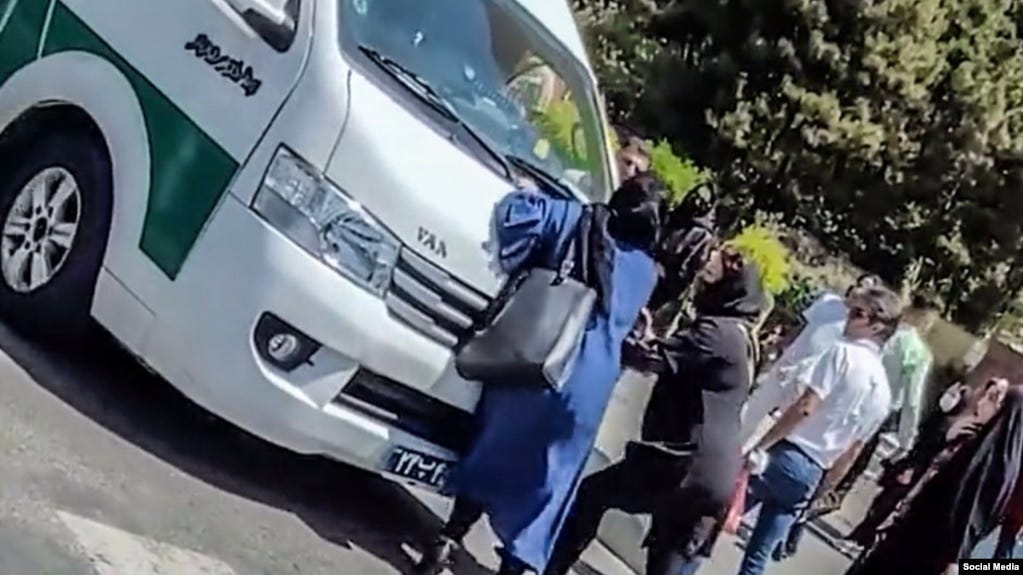
Official figures are rarely published, so even scattered numbers are revealing. In the first three months of 2007 alone, the Guidance Patrol reported issuing formal warnings to more than 430,000 women. A 2022 survey by Iran Open Data found that 71 percent of female respondents and 62 percent of male respondents said that at least one member of their family had been confronted by the morality police or other authorities over hijab.
Mahsa Amini’s death triggered nationwide outrage. The uprising that followed, under the slogan “Women, Life, Freedom”, shook the regime at its ideological core. At least 551 protesters were confirmed killed by state security forces during the 2022–2023 uprising. Yet for all the violence, the state was forced onto the defensive. “Women, Life, Freedom” became the first popular uprising in the Islamic Republic’s history to force the regime into retreat. One retreat was enough. When a regime builds its identity around a visible social order, and the public abandons that order without the state being able to restore it, the result is more than a policy failure. It amounts to a form of soft collapse.
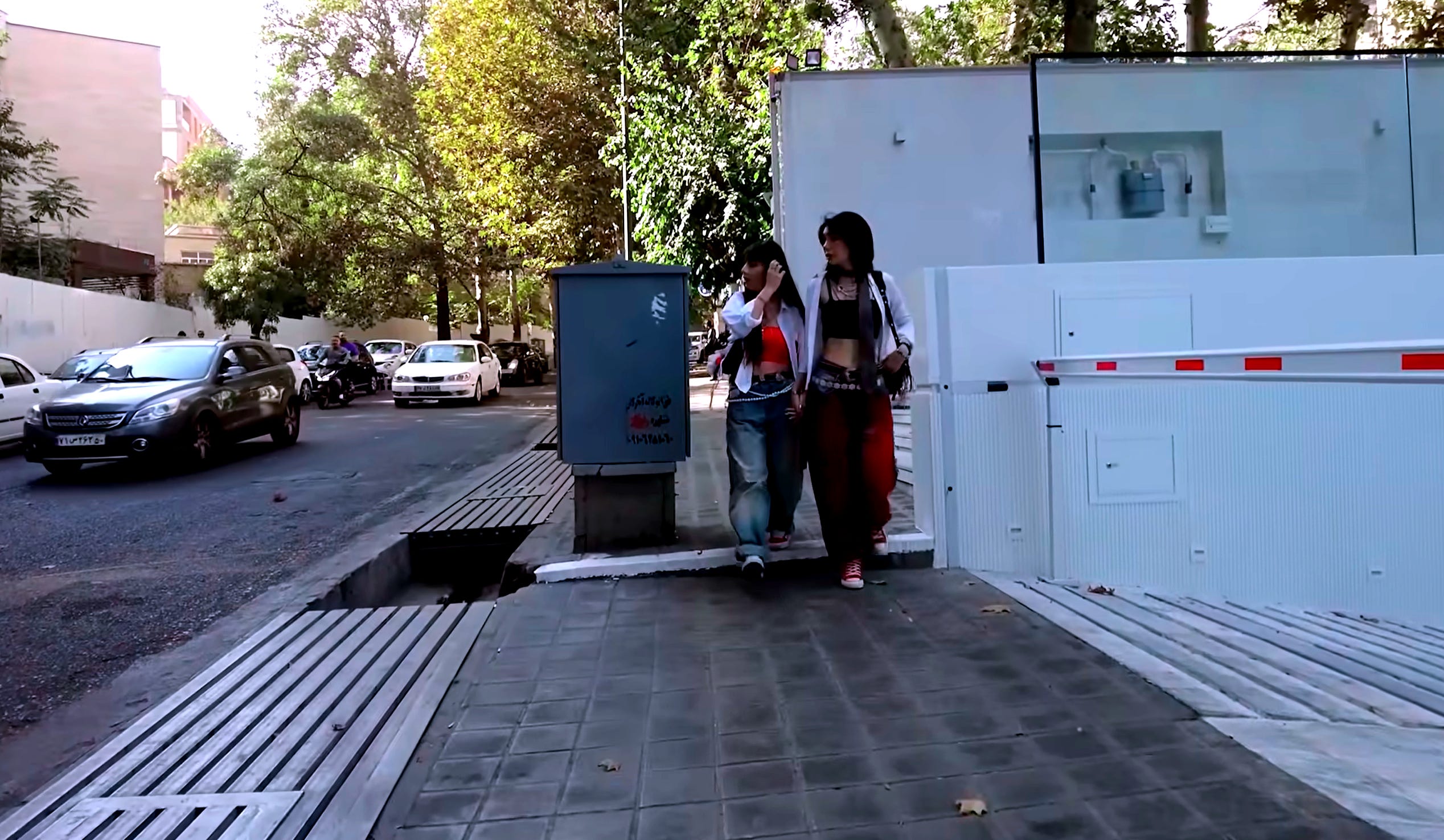
That was a major victory for Iranian women and a major defeat for the regime. After 2023, Ali Khamenei, who was killed in a US-Israeli air strike on 28 February, publicly criticized the authorities more than once for failing to restore compulsory hijab. But the barrier had already been broken, and the regime never managed to restore the old order. Today, compulsory hijab remains on the books, but it no longer exists in the form it once did. What was once a state mandate has become a daily act of civil disobedience.
For the Islamic Republic, hijab was never just a law. It was an ideological Berlin Wall: a visible social order through which the regime controlled women and asserted its authority over everyday life. When that wall fell, the regime’s ability to impose itself in the street and across society was weakened, and its credibility was diminished. The Islamic Republic used to declare that “hijab is the legacy of hundreds of thousands of martyrs”. Its narrative was that Iranian society was devoutly Muslim and stood behind the Islamic order. That narrative cracked in the most visible place possible: the daily lives of ordinary people. Every unveiled woman became living evidence against one of the regime’s most powerful claims.
2) The Fall of the Axis of Resistance
The loss of Syria, the killing of Hassan Nasrallah in 2024, and the severe weakening of Hezbollah and other proxy forces shook one of the central pillars of the regime’s regional narrative.
For years, the Islamic Republic spoke of control over four Arab capitals, of a Shia crescent, and of strategic depth. It presented itself as a power on the march. The regional project was not simply military. It was also psychological and political. It was meant to show that the regime was expanding, advancing, and shaping the region around itself.
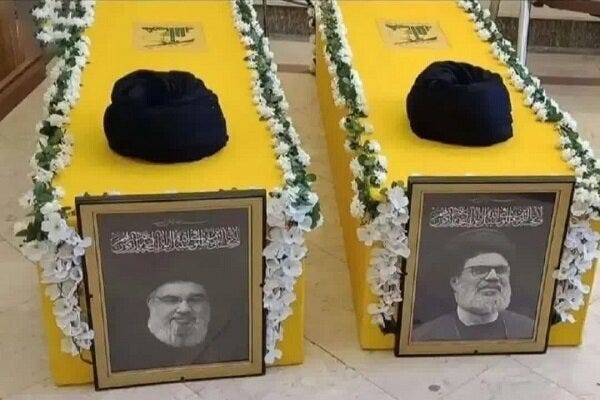
When Iranians protested against dire economic conditions caused in large part by sanctions linked to the regime’s nuclear policy and broader foreign policy, the answer was simple: this was the price of independence. Ali Khamenei repeatedly said that Iran was close to the summit, that the hardships were merely part of the climb, and that victory was near. Iran’s regional presence was presented as proof. The message was constant: if we do not fight in Beirut, Homs, and Hama, we will have to fight in Tehran.
When Assad fell, when Syria was lost, and when the proxies took crippling blows, that image began to collapse. What had been presented as strategic depth looked increasingly like an expensive illusion. What had been sold as a durable architecture of power looked far more fragile than it had claimed.
What happened in Syria brings to mind the Soviet Union’s defeat in Afghanistan. It was a costly external project meant to symbolize power, but instead exposed deep structural weakness. The damage did not remain on the battlefield. It traveled back into the system itself. Some historians trace the roots of the Soviet Union’s collapse to its defeat in Afghanistan. Syria was the Islamic Republic’s Afghanistan moment. In moments like this, defeat is not just an event. It is a message to society, to elites, and to the regime’s own rank and file that the ceiling is lower than they had been told it was.
3) The Fall of Invincibility
Israel’s attack in June 2025 exposed the gap between propaganda and reality. So did the collapse of the air-defense myth, the damage to the missile program, and the bombing of nuclear facilities meant to underpin the regime’s sense of strategic security and deterrence.
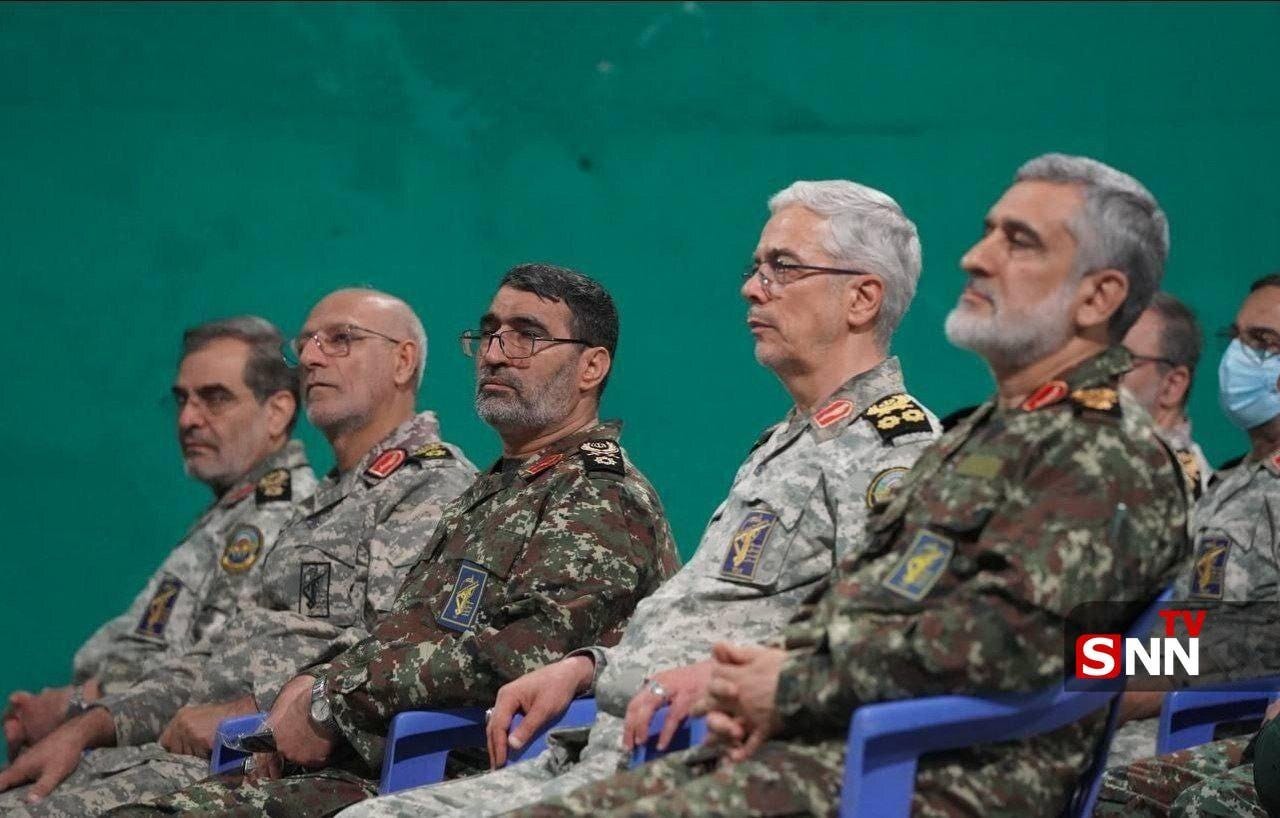
For years, Ali Khamenei and his IRGC commanders boasted about indigenous air-defense systems such as Khordad-15, Bavar-373, and Sevom Khordad. They told Iranians that even the most sophisticated US and Israeli aircraft could not operate over Iran. Billions were spent developing these systems and building an image of invulnerability. That myth collapsed on first contact with reality when the 12-day war began. A large number of Iran’s senior military commanders did not even realize the war had started. They were killed in their beds in the opening moments of the attack.
The 12-day war shattered the regime’s image of competence, control, and strength for millions of Iranians. Much of the population that opposed the regime saw it humiliated. For many Iranians, Iran and the Islamic Republic are not the same thing. The regime’s humiliation was therefore not experienced as a national humiliation. Many were openly pleased to see it struck so hard. At the same time, parts of its own support base were stunned to see Israeli bombers operate over Iran with such ease.
The Islamic Republic had always presented itself as the guardian of national security, so the defeat did not remain confined to the military sphere. It spilled into the political system. After the 12-day war, the Islamic Republic lost credibility on a significant scale, including among parts of its own support base. Months later came an unprecedented uprising, followed by an unprecedented massacre.
4) The Rise of a Visible Alternative
For 47 years, one of the Islamic Republic’s central political and security objectives has been to prevent any serious alternative from taking shape. The aim was to fix one idea in the public mind: that there is no future outside the Islamic Republic. This was not simply a political claim. It was one of the central narratives through which the regime sustained its rule.
To protect that narrative, the regime assassinated dissidents inside and outside the country. It prosecuted, imprisoned, and in many cases executed activists, journalists, students, and lawyers. It never allowed meaningful competition within the electoral system and tolerated no political activity beyond its own loyalists. It also ran sustained campaigns to discredit dissidents and destroy their public standing through propaganda and falsehoods. Arguably, the largest such campaign in post-revolutionary Iran has been directed at Reza Pahlavi. Over the past 47 years, the regime has deployed a vast propaganda apparatus to shape public memory of the Pahlavi era. Through books, documentaries, television series, textbooks, and curricula from primary school to university, it has portrayed that period as corrupt, repressive, incompetent, and subservient to the West.
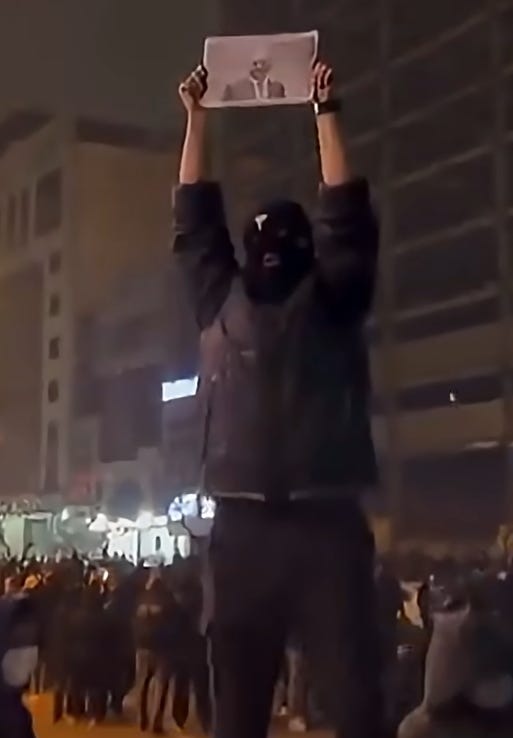
Despite this, his name has continued to be heard in protests over the years. That trend reached a new peak when he called for demonstrations on 8 and 9 January, and large numbers answered. The rise of Reza Pahlavi as a visible political alternative, with a strong social base inside the country, strikes directly at the narrative of no alternative. Whether one sees him as the answer is not the main point here. The point is that the regime’s monopoly over the future has been broken. The idea that there is no credible political horizon outside the Islamic Republic no longer carries the same force.
Regimes do not survive only by controlling the present. They also survive by shaping the future. Once that narrative weakens, something profound begins to shift.
5) The largest mass killing in contemporary history
The events of 8 and 9 January 2026 marked a decisive shift in Iran’s political landscape. They followed a nationwide call for protest by Reza Pahlavi in a video message that reached tens of millions. In Tehran, an estimated 1.5 million people took to the streets, while major strikes paralyzed the Grand Bazaar and other commercial centers. Similar scenes were repeated in more than 400 cities, with total participation reaching around 5 million.
The state responded with what has been described as the deadliest crackdown in the history of the Islamic Republic. Reports by Iran International said security forces, including the IRGC and regional proxy forces, used lethal force that killed around 36,500 people in forty-eight hours. What followed became known as the January Massacre.
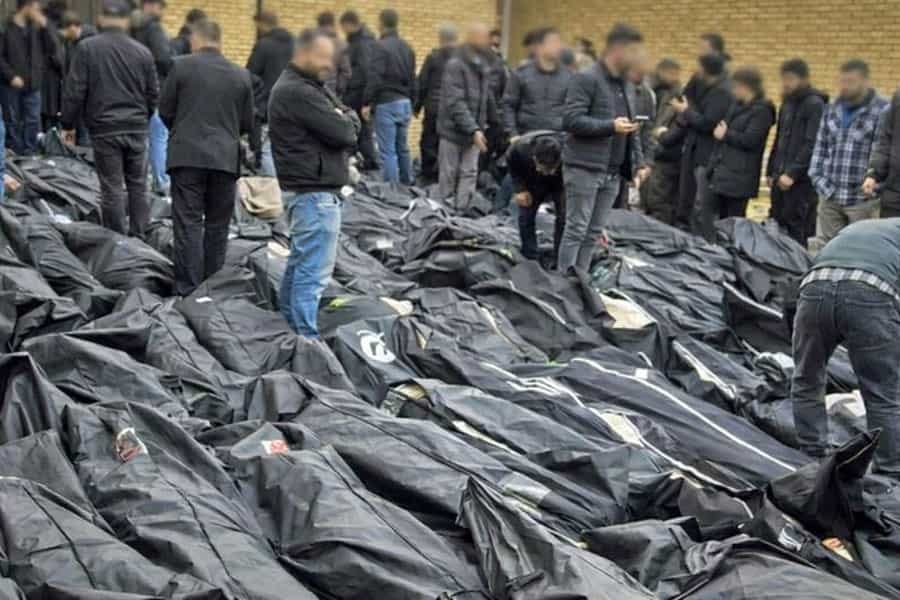
The scale of the violence shattered another narrative on which the regime had long depended: the narrative, sold both at home and abroad, that the Islamic Republic still ruled with some measure of public consent. A state that still commands genuine consent does not need to kill on such a scale to clear the streets. And crowds do not reach this level of sacrifice if fear is still doing its work. Mass killing on this scale means that tens of thousands were prepared to remain in the streets despite tear gas, gunfire, and death. It means fear had begun to break.
That was the deeper political meaning of the January Massacre. The regime managed to end the protests, but only at the cost of exposing itself more nakedly than ever before. For many Iranians, it no longer appeared as a state that governed, but as a machine of survival operating through brute terror. Economic and social grievances hardened into something more existential: a growing conviction that the Islamic Republic’s survival was incompatible with their own future. For the first time, a wide cross-section of society rallied openly behind the exiled monarchy.
The regime, for its part, described the protests as a foreign-backed coup. That claim, together with the scale of the killings and the visible weakening of the state’s internal machinery, helped create the conditions for external intervention. The coordinated military campaign by the United States and Israel was presented by the opposition as a humanitarian necessity aimed at dismantling the apparatus of terror. In that sense, the events of early January did not simply deepen the regime’s internal crisis. They helped destroy the narrative that the Islamic Republic still ruled by consent, and showed that even fear itself was beginning to fail.
The Last Feather
It was against this backdrop that the Israeli-US military operation began on 28 February. The scale of the damage is now impossible to ignore. The bombing campaign has degraded the Islamic Republic across multiple levels: from its nuclear and missile programs to the core of its coercive apparatus, down to the local Basij and police stations. The Supreme Leader is dead. More than fifty senior IRGC commanders have been killed, along with influential figures such as Ali Larijani.
If the war ends without the immediate fall of the regime, many will label it a defeat for the United States and Israel. But battlefield metrics are a poor measure of political reality. Mojtaba Khamenei would be a weak successor inheriting the ruins of the system his father led for thirty-seven years. The economy is in dire condition. Sanctions will not disappear.
Political systems do not always collapse during war. Often, they collapse in the aftermath, when military failure gives way to succession crises, elite fracture, and a society no longer willing to live as before.
The question is no longer whether the Islamic Republic survives this war. It is whether it can survive its own survival.
The structure has been hollowed out; now it is only a matter of which feather finally breaks the back.
I am not paid by Mehdi P. to support whatever he writes, however, again, I agree with the argument set forth by the author in the article:))
Metaphor One: The regime is now a wounded wild animal (a boar, which in Texas, is considered a pest) hiding in bushes. It is bleeding. No doubt about it.
Metaphor Two: The regime has been reduced to a cult, not a small one; rather a fairly large one (as cults go). We see it on the screen--black chador clad women with their ever-present small children and their bearded and uncouth looking husbands, fathers and brothers.
Are they Iranian? Yes, they are.
Are they a sub-set of Iran's population? Yes, they are.
What sets them apart from other Iranians:
1. Their minority position in the overall Iranian society (less than 10%)
1. Their monopoly of political violence (for now), thanks to their possession of small arms and machine guns
2. Their provincial AND religious backgrounds and socializations, respectively
3. Their crudeness yet cunningness (Iranians are one of the most intelligent people on the Planet)
4. Their belief that they have the truth and righteousness on their side
6. Their willingness to KILL (preferable) and to die (less preferable)
7. Their consciousness that they are on their own and this regime of theirs was their FIRST and LAST platform of governance
With continued Israeli destruction of the agents of suppression, the ranks of those that belong to item no. 6 will thin out, leaving the remainder to cede the arena.
Even if there occurs a ceasefire, the regime will metastasize into a Zombie one with a Zombie religion (I use the term Zombie religion, borrowing from the French philosopher, Emmanuel Todd and his three-stage of a religion's demise). The regime will be a bankrupt one, morally, in the eyes of the 90% of Iranians and the rest of the world (apart from Shiite populations in Lebanon, Pakistan and Sunnis in the rest of the world that are intrinsically anti-Semites and anti-Western, but not brave enough to proclaim it. This especially applies to those in Egypt, Jordan, Malaysia and Indonesia).
The regime, post ceasefire, will continue to blast its "victimhood", "bravery" and "fortitude" in the face of an onslaught by the world's first superpower and its nuclear-powered proxy in West Asia (the Middle East).
What to do with this "lot"? Destroy their outer core physically and separate their middle core by rendering them powerless. How? By toppling the regime?
When? When the ceasefire occurs and post-annihilation of the means and tools of suppression.
How? By inciting the 80%-90%ers to replace the 10% on the streets and proclaim the end of the republic of Islamic terror.
Examples in history? The closes one would be the demise of the Argentinian junta after the Malvinas/Falklands war in 1982. Not too close an example, but close enough.
For Israel ending the campaign without regime collapse won't be tantamount to defeat, for trump maybe. Israel plays the long game just what the Islamic Regime leaders thought about themselves. Not least because considering its size Israel cannot hope to defeat a country like Iran in a single campaign. Its strategy is rather death by a thousand cuts.
As for the massacre, i don't think the world has had enough chance to gasp at the scale due to scarcity of information which was coming out of Iran. I think the day will come when this atrocity will be revealed in all its horridness.